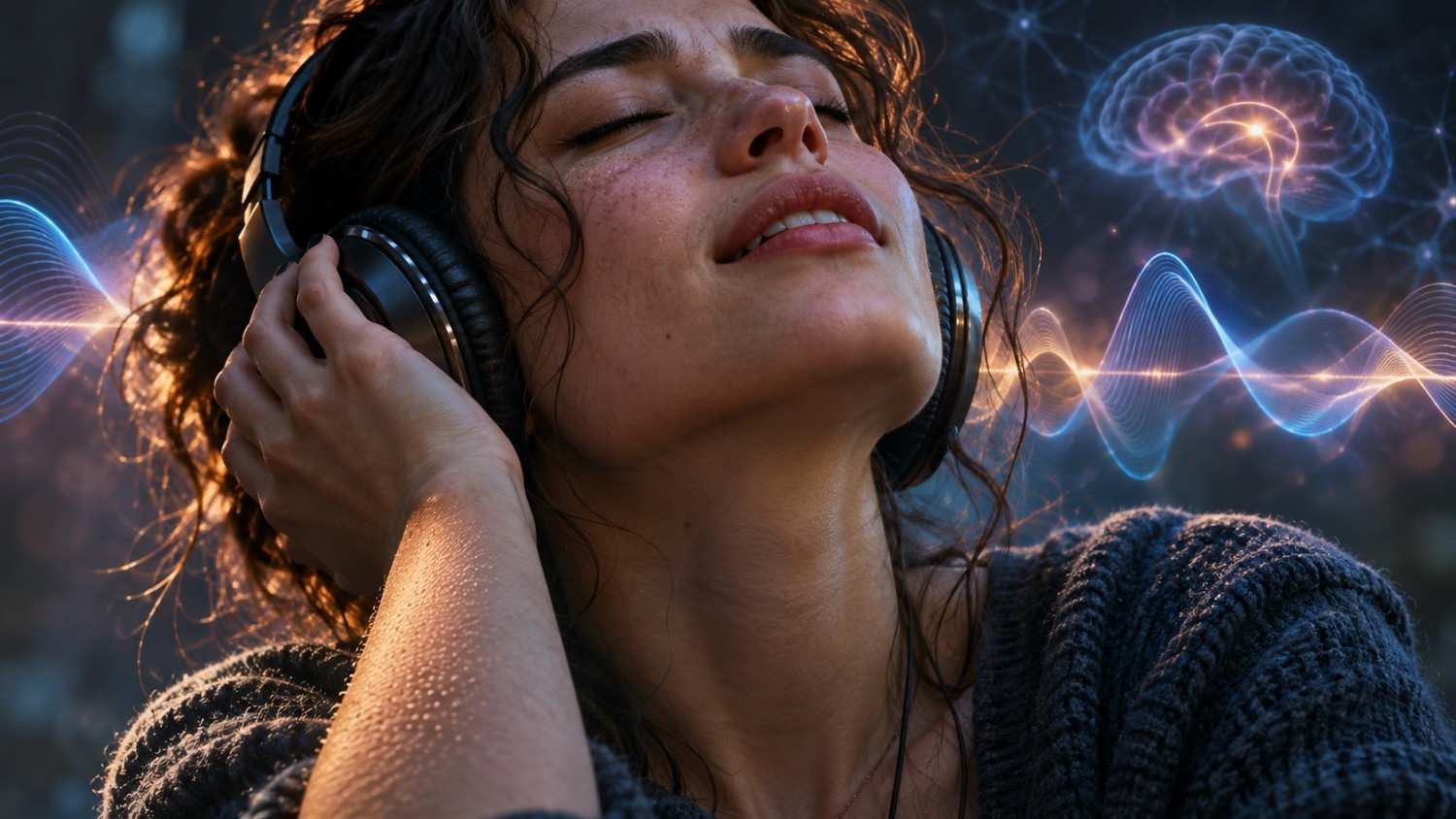
A song doesn’t have to be loud, dramatic, or even sad to send shivers down your spine. Sometimes, a single piano note, an unexpected harmony, or a familiar voice is enough to create that unmistakable tingling sensation. I’ve often wondered how something we simply hear can produce such a powerful physical reaction, especially when there’s no obvious reason for our skin to respond.
So, why does music give you goosebumps? The answer lies in a fascinating connection between musical anticipation, emotional memories, dopamine activity, and your nervous system. Scientists call this reaction musical frisson, or aesthetic chills, and it reveals how deeply sound can influence both the brain and body.
What makes this phenomenon even more interesting is that the same song can give one person chills while leaving another completely unaffected. Understanding the science behind these differences reveals why music can feel so intensely personal.
What Happens in Your Brain When Music Gives You Goosebumps?
Listening to music activates several interconnected brain regions responsible for processing sound, emotions, memories, and pleasure.
When a song reaches an emotional peak, these networks work together to produce an intense experience that may lead to shivers or goosebumps.
How Does Dopamine Cause Music-Induced Chills?
Dopamine is a neurotransmitter involved in motivation, reward, and pleasure.
A study published in Nature Neuroscience found that intensely pleasurable musical experiences can trigger dopamine release in the brain’s striatum.
The nucleus accumbens, part of the brain’s reward system, plays an important role in processing musical pleasure.
Interestingly, dopamine activity occurs during both the anticipation of a musical climax and the peak emotional experience.
I’ve noticed this when listening to a familiar song. Sometimes, the excitement builds before my favorite chorus even begins.
How Does Your Nervous System Create Goosebumps?
Your sympathetic nervous system controls involuntary physical responses associated with excitement, stress, and emotional arousal.
When music triggers strong emotions, this system can activate tiny muscles called arrector pili around your hair follicles.
These muscles contract, making your hairs stand upright. Scientists call this physical reaction piloerection.
Musical chills may also involve changes in heart rate, breathing patterns, and skin conductance, which reflects sweat gland activity.
However, not every emotional musical experience produces visible goosebumps.
What Is Musical Frisson, and Why Does It Happen?
Musical frisson describes a sudden emotional thrill accompanied by physical sensations such as tingling, shivering, or goosebumps.
The term comes from the French word for shiver.
Frisson frequently occurs during emotionally powerful musical moments, especially when a song creates anticipation or delivers something unexpected.
Why Do Unexpected Notes and Musical Changes Trigger Chills?
Your brain constantly predicts upcoming melodies, rhythms, and harmonies.
When music unexpectedly changes direction, the difference between what you anticipate and what you hear creates a prediction error.
A sudden key change, dramatic crescendo, unexpected silence, or soaring vocal performance can disrupt those expectations.
Under the right emotional conditions, this surprise contributes to pleasurable musical chills.
Interestingly, the release of musical tension can feel just as powerful as the surprise itself.
Why Do Certain Songs Give You Goosebumps More Than Others?
Not every song creates the same emotional response. Personal memories, musical structure, and individual preferences influence how strongly listeners react.
Why Do Powerful Vocals and Crescendos Cause Chills?
Dramatic musical transitions often create intense emotional experiences.
A quiet piano introduction followed by a powerful orchestra, an unexpected harmony, or an impressive vocal performance can produce a sudden rush of excitement.
I particularly notice this during emotional movie soundtracks, gospel performances, and live acoustic recordings.
These musical moments combine anticipation, surprise, and emotional intensity.
Why Do Songs Connected to Memories Feel So Powerful?
Music strongly interacts with brain networks involved in autobiographical memory.
A song associated with your graduation, wedding, childhood, or first concert can instantly bring back meaningful emotions.
For example, hearing a familiar song from a high school celebration or family road trip may trigger nostalgia and physical chills.
This explains why a simple melody can sometimes feel more powerful than an elaborate musical composition.
Why Do Some People Experience Musical Frisson More Often?
Some people frequently experience goosebumps from music, while others rarely notice them.
Researchers have explored differences in brain connectivity, personality, and emotional engagement to understand this variation.
Does Brain Connectivity Influence Musical Chills?

Research published in Social Cognitive and Affective Neuroscience found an association between musical chills and stronger structural connectivity linking auditory processing regions with areas involved in emotion.
These include the auditory cortex’s surrounding regions, anterior insula, and medial prefrontal cortex.
The findings suggest that differences in communication between sound-processing and emotional networks may influence musical pleasure.
However, the study involved a small sample, so the results should not be generalized to everyone.
Are Emotionally Sensitive People More Likely to Get Chills?
Research has associated musical chills with openness to experience, a personality characteristic involving imagination, curiosity, and appreciation for new experiences.
People who become deeply absorbed in music may experience frisson more frequently.
However, getting goosebumps does not necessarily indicate greater intelligence, empathy, or emotional sensitivity.
Why Does Music Trigger an Ancient Evolutionary Reflex?
Goosebumps originally served important survival functions in furry animals.
Raised hairs helped trap insulating air during cold conditions and could make an animal appear larger when facing threats.
Humans retain this reflex, although it provides little protection against cold temperatures.
Researchers suggest that sudden or emotionally intense musical experiences may activate some of the same arousal pathways involved in vigilance.
However, the precise evolutionary explanation for music-induced chills remains uncertain.
Can Happy, Sad, and Nostalgic Music All Cause Goosebumps?
Yes. Different emotions can produce similar physical reactions.
A joyful pop anthem, heartbreaking ballad, nostalgic country song, or dramatic orchestral performance may trigger musical frisson.
Sad music can create a combination of emotional reflection and aesthetic pleasure, while uplifting music may generate excitement.
Personal associations also influence which songs affect you most strongly.
Why Does Live Music Sometimes Give You Stronger Chills?
Live concerts combine powerful sound, visual stimulation, shared excitement, and emotional anticipation.
Hearing thousands of fans sing together or watching a favorite performer deliver an emotional finale can intensify the experience.
A cool environment may also make goosebumps more noticeable, although temperature-related goosebumps are not necessarily musical frisson.
Louder music can heighten arousal, but excessive volume risks hearing damage and isn’t necessary for experiencing chills.
Can You Make Yourself Experience Musical Chills?

You cannot guarantee musical frisson, but focused listening may make emotional reactions more noticeable.
I find that listening without distractions helps me appreciate subtle harmonies, instrumental changes, and emotional lyrics.
Revisiting meaningful songs, exploring unfamiliar musical styles, or attending live performances may also create opportunities for intense listening experiences.
The most important thing is enjoying music naturally rather than trying to force a physical reaction.
Frequently Asked Questions (FAQs)
1. Is Getting Goosebumps From Music Normal?
Yes. Music-induced goosebumps are a normal physiological response to emotional stimulation. However, not everyone experiences them, and the frequency varies.
2. Why Does Music Give You Goosebumps Even When You’re Not Cold?
The reason why music gives you goosebumps without cold temperatures involves emotional arousal activating your sympathetic nervous system. This can cause tiny muscles around your hair follicles to contract.
3. Does Getting Chills From Music Mean You’re More Emotional?
Not necessarily. Musical chills may relate to emotional engagement and personality traits, but they do not reliably measure emotional intelligence or sensitivity.
4. Can Everyone Experience Musical Frisson?
No. Some individuals frequently experience aesthetic chills, while others rarely or never notice them. Differences in emotional responses, brain processing, and musical preferences may contribute.
Final Thoughts
I’ve always found it remarkable that something as simple as a melody can produce such a powerful physical response.
Understanding musical frisson makes those unforgettable listening experiences even more fascinating. Whether we’re exploring the benefits of listening to piano music before bed or enjoying an emotionally moving song, music has a unique ability to influence how we feel.
From dopamine-related reward activity and surprising harmonies to emotional memories and ancient nervous system reflexes, music engages our minds and bodies in extraordinary ways.
The next time your favorite song sends chills down your spine, remember that you’re experiencing a remarkable connection between sound, emotion, and the human brain.