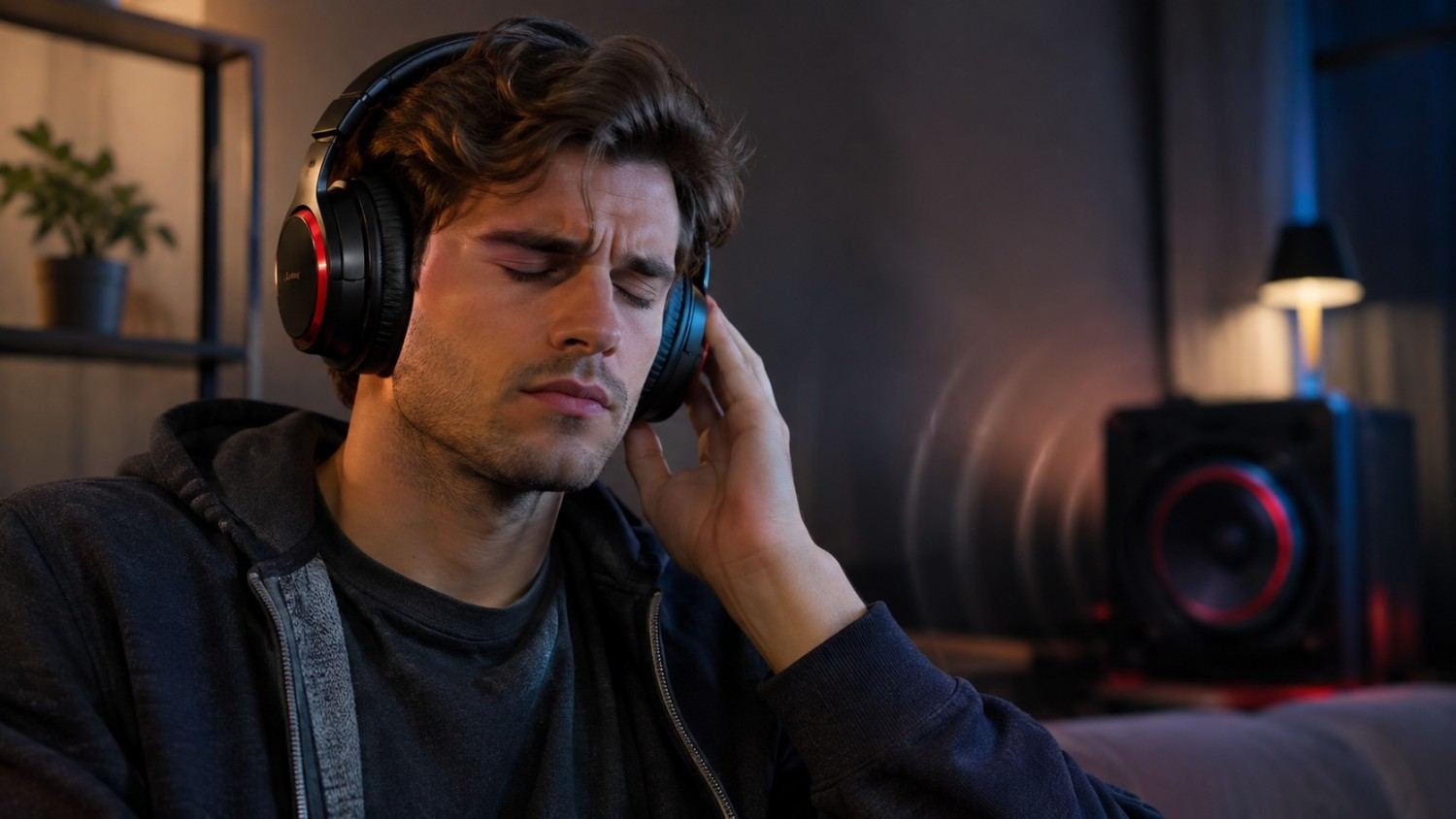
There’s something incredibly satisfying about feeling deep bass pulse through your headphones or vibrate through your chest at a concert. I’ve always enjoyed how powerful bass makes music feel more immersive. But that experience raises an important concern: can loud bass music damage your hearing?
Yes, excessive bass-heavy music can cause temporary hearing problems, permanent hearing loss, and tinnitus. The danger comes from sound intensity and exposure duration rather than bass frequencies alone.
Whether you enjoy hip-hop through wireless earbuds, powerful car subwoofers, or live concerts, understanding how low-frequency sound affects your ears can help you listen more safely.
How Does Loud Bass Music Affect Your Ears?
Bass generally covers frequencies between 20 and 250 hertz (Hz). These low-frequency sound waves create the deep rumbling and thumping sensations associated with electronic music, hip-hop, and powerful sound systems.
When music enters your ears, sound vibrations travel through the middle ear into the cochlea, a spiral-shaped structure inside your inner ear.
The cochlea contains delicate sensory hair cells that convert vibrations into electrical signals your brain recognizes as sound.
According to the National Institute on Deafness and Other Communication Disorders, excessive noise can damage these hair cells and their connections. Because human cochlear hair cells cannot naturally regenerate, severe damage can lead to permanent noise-induced hearing loss (NIHL).
Why Can Bass Sound Less Dangerous Than It Actually Is?
One surprising characteristic of bass is that our ears are generally less sensitive to low frequencies than to sounds in the middle-frequency range.
Consequently, deep bass may require greater sound pressure to seem equally loud.
I’ve noticed how easy it is to increase the volume when listening to bass-heavy tracks because the deep vibrations feel enjoyable rather than uncomfortable.
However, the absence of sharp pain doesn’t guarantee safety. Your ears can experience harmful sound exposure even when the music feels comfortable.
Can Low-Frequency Bass Damage High-Frequency Hearing?

Yes. Although bass occupies the lower-frequency range, extremely intense low-frequency sound can affect cochlear structures beyond the regions primarily responsible for detecting bass.
Prolonged exposure may contribute to hearing changes across multiple frequencies, including those important for understanding speech.
The Hearing Health Foundation emphasizes that excessive sound exposure can damage hearing regardless of frequency.
How Loud Does Bass Need to Be to Damage Your Hearing?
Sound intensity is measured in decibels (dB). Repeated exposure to noise at or above approximately 85 A-weighted decibels (dBA) can increase the risk of hearing damage.
The CDC’s National Institute for Occupational Safety and Health recommends limiting workplace exposure to 85 dBA over eight hours, with recommended exposure time halved for every 3 dB increase.
For example, at 94 dBA, the corresponding occupational exposure limit is approximately one hour.
These are occupational guidelines, not guarantees of safety for recreational listening.
The World Health Organization uses an average of 80 dB for up to 40 hours weekly as a reference for safer adult recreational listening. Around 120 dB, even brief exposure can be hazardous.
The louder your music becomes, the less time you should spend listening.
Can Bass-Heavy Headphones or Car Subwoofers Damage Your Ears?
Yes. Bass-heavy headphones, earbuds, and car audio systems can contribute to hearing damage when they produce excessive sound pressure.
Headphones deliver sound directly into the ear canal, making it easy to experience high listening levels without disturbing people nearby.
Meanwhile, powerful car subwoofers can generate intense low-frequency sound inside enclosed vehicle cabins.
The vibrations you feel through your seat or chest don’t necessarily indicate how much acoustic energy reaches your ears.
A smartphone sound-level app may help identify loud environments, although ordinary phone microphones and A-weighted measurements may not accurately characterize very powerful low-frequency bass.
What Are the Warning Signs of Hearing Damage From Loud Bass?
Hearing damage doesn’t always cause immediate pain. Sometimes, symptoms become noticeable only after you remove your headphones or leave a concert.
You might experience ringing, buzzing, or humming sounds known as tinnitus. Other warning signs include muffled hearing, difficulty understanding conversations, increased sound sensitivity, and trouble hearing higher-pitched sounds.
Temporary symptoms can improve after exposure ends, but they shouldn’t be ignored.
Repeated exposure can contribute to lasting hearing problems. Sudden hearing loss requires urgent medical attention, while persistent tinnitus or muffled hearing warrants professional evaluation.
The Cleveland Clinic explains that noise-induced hearing loss can develop gradually, making prevention especially important.
How Can You Listen to Bass-Heavy Music Without Damaging Your Hearing?’

Protecting your hearing doesn’t mean giving up your favorite bass-heavy tracks. A few practical adjustments can make listening safer.
What Is a Safe Headphone Volume for Bass-Heavy Music?
The WHO recommends keeping personal audio devices below 60% of maximum volume as a practical precaution.
However, this percentage isn’t a universal safety threshold because headphones and devices produce different sound levels.
Choose a comfortable volume, avoid unnecessary bass boosts, and monitor headphone sound exposure whenever your device supports it.
Do Noise-Canceling Headphones Help Prevent Hearing Damage?
Noise-canceling and well-fitting noise-isolating headphones can reduce background noise, allowing you to enjoy music without turning up the volume.
I find this especially useful in noisy environments where outside sounds might otherwise encourage louder listening.
Remember that noise cancellation doesn’t automatically make high-volume music safe.
How Often Should You Take Listening Breaks?

Regular quiet breaks help reduce continuous noise exposure.
The WHO suggests resting your ears in a quiet environment for approximately 10 minutes after every hour of listening in loud settings.
At concerts and clubs, wear properly fitted hearing-protection earplugs and move farther away from powerful speakers when possible.
Frequently Asked Questions (FAQs)
1. Can Loud Bass Music Damage Your Hearing Permanently?
Yes. Repeated or prolonged exposure to excessively loud bass can permanently damage inner-ear hair cells and contribute to noise-induced hearing loss and tinnitus.
2. Is Loud Bass Worse Than Loud Treble?
Not necessarily. Both bass and treble can damage hearing at sufficiently high sound levels. Bass may seem less intense because human hearing is less sensitive to many low-frequency sounds.
3. Can You Feel Bass Vibrations Without Damaging Your Ears?
Yes. Feeling bass vibrations doesn’t automatically indicate hearing damage. However, strong vibrations may accompany dangerously high sound levels, so listening volume still matters.
4. Can Your Ears Recover After Listening to Loud Bass?
Temporary hearing changes sometimes improve with time, but permanently damaged cochlear hair cells do not naturally regenerate. Seek medical care if hearing changes persist or appear suddenly.
Final Thoughts: Enjoy Powerful Bass Without Risking Your Hearing
Understanding how loud bass music can damage your hearing helps explain why even enjoyable listening experiences deserve attention.
Deep bass isn’t automatically harmful, but excessive volume and prolonged exposure can gradually affect your hearing health. Whether you enjoy powerful beats or those emotional moments when music gives you goosebumps, protecting your ears should always be a priority.
I’ve learned that enjoying great sound doesn’t require pushing every speaker or headphone to its maximum output. Lowering the volume, taking listening breaks, and using appropriate hearing protection can make a meaningful difference.
Ultimately, protecting your ears today gives you a better chance of enjoying the music you love for years to come.