A music file can lose nearly 80% of its original data and still sound remarkably close to the studio recording. That surprising possibility explains why digital audio compression has become essential to music streaming, downloads, and portable listening.
But how does digital audio compression affect music quality, and can listeners actually recognize the difference?
The answer depends on the compression method, bitrate, recording complexity, and playback equipment. While lossless compression preserves every original audio sample, lossy compression permanently discards selected information to reduce file size.
Understanding these differences helps you choose better streaming settings, avoid unnecessary storage costs, and enjoy music without sacrificing details that matter.
What Happens When Digital Music Gets Compressed?
Digital recordings store sound as numerical information. Higher-quality uncompressed recordings can require substantial storage space, especially when maintaining extensive music libraries.
Audio compression reduces that storage requirement through mathematical encoding techniques. However, compression does not always mean sacrificing sound quality.
Lossless Compression Preserves Original Audio
Lossless formats, including FLAC and ALAC, reduce file sizes without permanently discarding audio information. During playback, the decoder reconstructs the original digital samples exactly.
The Library of Congress explains that uncompressed and lossless-compressed audio provide the highest fidelity, making them valuable for preservation and professional use.
Lossless audio is particularly useful for collectors, music producers, and listeners who want accurate recordings without maintaining enormous uncompressed files.
Lossy Compression Prioritizes Smaller Files
Lossy formats such as MP3, AAC, Ogg Vorbis, and Opus operate differently. Their encoding algorithms identify audio information considered less perceptible to human hearing and allocate fewer bits to it.
Researchers at Carnegie Mellon University explain how psychoacoustic models exploit auditory masking, where stronger sounds make nearby quieter sounds difficult to detect. For example, a powerful bass note might mask a faint background instrument.
Removing or approximating that information reduces file size, although aggressive compression can introduce audible distortion.
How Bitrate Changes the Listening Experience
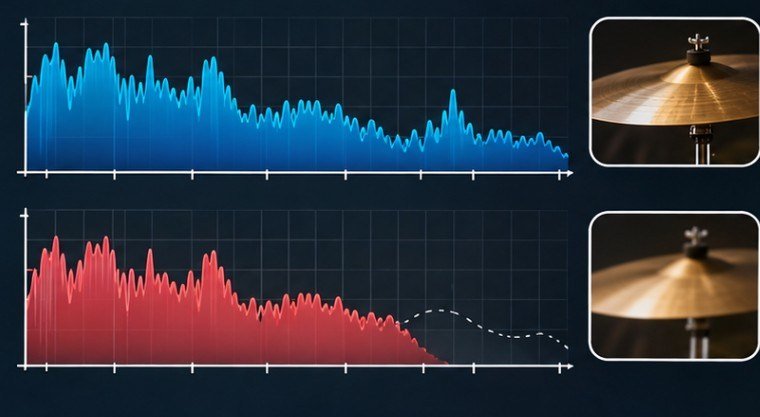
Bitrate measures how much encoded information passes through an audio stream each second, usually expressed in kilobits per second (kbps).
For the same codec and recording, higher bitrates generally provide more room to preserve sound details.
| Audio setting | Approximate size for 4 minutes | Typical listening experience |
| MP3 128 kbps | 3.8 MB | Acceptable, but artifacts may be audible |
| MP3 192 kbps | 5.8 MB | Good everyday quality |
| MP3 320 kbps | 9.6 MB | Often difficult to distinguish from lossless |
| CD-quality WAV | 42.3 MB | Uncompressed original-quality audio |
| FLAC (CD-quality) | Varies | Exact PCM reconstruction |
File sizes are estimates. FLAC size depends on the recording’s compressibility, while encoded-file overhead can affect other figures. A crucial distinction: bitrate comparisons work best within the same codec.
Modern AAC or Opus encoding can produce excellent results at bitrates lower than those required by some older encoders.
The Internet Engineering Task Force’s Opus specification describes an adaptive codec designed to accommodate different audio content, bandwidth conditions, and applications. That flexibility helps explain why bitrate alone cannot determine perceived quality.
Five Ways Excessive Compression Changes Music
Heavy lossy compression can alter several recognizable characteristics of a recording.
1. High Frequencies Lose Their Sparkle
Cymbals, acoustic guitars, and delicate percussion contain complex high-frequency information. Aggressive encoding may reduce these details, making recordings sound less airy or naturally textured.
2. Instruments Become Harder to Separate
Dense orchestral arrangements and layered electronic productions create challenging conditions for compression algorithms. At insufficient bitrates, background elements may become less distinct, giving the recording a congested character.
3. Metallic Artifacts Appear
Compression artifacts sometimes resemble metallic ringing, watery distortion, or unnatural fluctuations. Sustained vocals, applause, and shimmering cymbals can expose these imperfections.
Research published by the Audio Engineering Society has examined perceived differences between high-bitrate AAC and uncompressed audio using carefully controlled listening tests. These comparisons reinforce why listening evaluations matter alongside technical measurements.
4. Transient Sounds Become Less Precise
Drum hits and sharp instrumental attacks change rapidly. Low-bitrate encoding can introduce pre-echo or soften the apparent precision of these short sounds. This becomes particularly noticeable in percussion-heavy music.
5. Repeated Encoding Compounds Damage
Converting an MP3 into AAC does not restore previously discarded information. Instead, another lossy encoding stage may introduce additional artifacts.
The National Institute of Standards and Technology identifies MP3 as a lossy encoding format, reinforcing the distinction between compressed delivery files and original recordings.
Keep lossless masters whenever future editing or conversion is possible.
Does Compression Matter More on Headphones or Speakers?
Playback equipment strongly influences whether compression artifacts become noticeable.
High-quality wired headphones can reveal subtle recording imperfections because they reduce competing environmental noise.
Detailed home speakers may expose similar problems, particularly in quiet rooms with controlled acoustics.
However, expensive equipment does not automatically guarantee that listeners can distinguish lossless audio from well-encoded MP3 or AAC. Individual hearing, volume matching, musical content, and expectation also influence perception.
What About Bluetooth Audio?
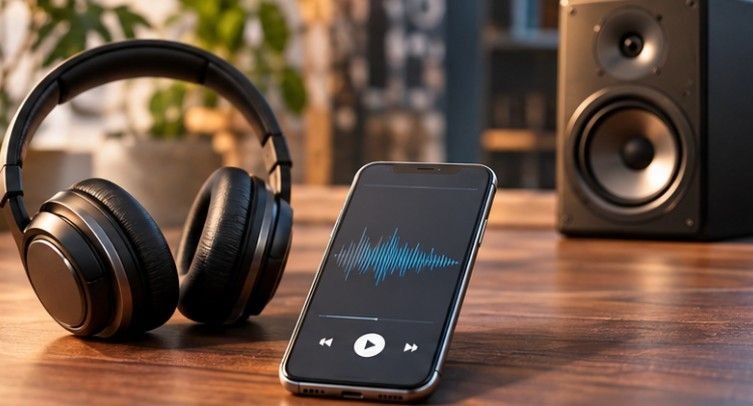
Many Bluetooth connections encode audio using codecs such as SBC, AAC, aptX, or LDAC, depending on device compatibility.
This additional processing can introduce another lossy compression stage, even when the source is lossless.
Some Bluetooth implementations support lossless transmission under specific conditions, but the capability should never be assumed. For predictable lossless playback, compatible wired equipment remains the simplest option.
Common Misconceptions About Compressed Audio
One widespread assumption is that lossless files automatically sound dramatically better than compressed alternatives.
In reality, a carefully encoded high-bitrate file may be perceptually transparent under ordinary listening conditions.
Another misconception involves high-resolution audio. A 24-bit recording is not necessarily better mastered than a 16-bit version, and upsampling cannot recreate missing information.
Also, digital file compression should not be confused with dynamic range compression, which changes the relationship between loud and quiet passages.
Both influence listening experiences, but they operate through entirely different processes.
Frequently Asked Questions
1. Does digital audio compression always reduce sound quality?
No. Lossless compression preserves the original digital audio exactly. Lossy compression discards information, although properly encoded high-bitrate files may sound indistinguishable from the original.
2. Is 320 kbps MP3 as good as FLAC?
FLAC preserves all original samples, while MP3 does not. Nevertheless, many listeners struggle to hear differences between well-encoded 320 kbps MP3 and lossless audio.
3. Can compressed music regain its original quality?
Lossy compression permanently removes information. Converting an MP3 into FLAC increases storage requirements but cannot reconstruct the original missing audio data.
4. Which format offers the best balance of quality and storage?
High-quality AAC, Opus, or MP3 works well for portable listening. FLAC and ALAC are better options when exact preservation matters.
The Real Measure of Better Sound
Digital compression has made enormous music libraries accessible without requiring enormous amounts of storage. The trade-off is not always audible, and choosing the largest file rarely guarantees a more enjoyable experience.
I recommend keeping lossless originals for important recordings while using high-quality lossy formats for everyday convenience.
Before paying extra for premium audio, compare the same recording under controlled conditions with your usual equipment.
The most meaningful improvement may come from better headphones, a quieter environment, or superior mastering rather than a higher bitrate.
Ultimately, great listening is measured by what reaches your ears, not how many megabytes occupy your device.