
When I look at a first record deal, I want two numbers before anything else. How much money can the artist actually use, and how much must their recordings earn before another check arrives? If you’re wondering how do record label advances work for new artists?
The short answer is that the label pays money upfront and generally recovers it from the artist’s share of recording royalties. The offer tells you the size of the advance. The contract tells you when it’s paid, what it covers, and which earnings the label can use to recover it.
How Much Do New Artists Get in a Record Label Advance?

There’s no standard first-deal advance. A label may consider your existing revenue, audience growth, recording budget, projected earnings, and whether other labels are making offers. Some deals have little or no advance. Others provide enough to fund a recording project and cover some living expenses while you work on it.
Ask for a breakdown of the offer. If a $30,000 advance includes $12,000 earmarked for recording, that leaves $18,000 available for other purposes before taxes, commissions, or other obligations. If the label offers recording funds separately, check whether those costs will still be charged to your royalty account. That extra budget can help you finish the record and increase the balance your royalties need to clear.
When Does the Label Pay the Advance?
A label may pay part of the advance at signing and the rest when you deliver recordings that meet the agreement’s requirements. The payment schedule matters if you need to book studio time, pay a producer, or cover mixing and mastering before the second installment arrives.
Read the delivery clause alongside the payment clause. It may specify how many tracks you owe, what files or clearances you must provide, and when the label must accept delivery or request changes. If the label will pay vendors directly, ask which bills it will cover and how those payments will appear on your royalty statement.
How Does a Record Label Recoup an Advance?
The practical answer to how do record label advances work for new artists? becomes clear on the royalty statement. In a traditional artist-royalty deal, the label calculates your royalty using the rate and revenue base specified in the contract. It then applies the royalties you earn to the outstanding balance. Once that balance clears, any remaining royalties become payable according to the contract’s reporting and payment schedule.
Streaming plays are one of the ways recordings generate revenue, but the amount an artist receives depends on the royalty arrangements behind the release. Understanding how artists get paid when you stream their songs helps explain how streaming income is calculated and why an artist’s share may first go toward recouping a record label advance.
A $30,000 first-deal example
Suppose the full $30,000 advance is recoupable, including the $12,000 recording allocation. Your contract pays you 20% of defined net receipts, and the label adds no other recoupable costs. If the first statement shows $50,000 in qualifying receipts, your royalty credit is $10,000. That brings the outstanding balance down to $20,000.
At that rate, $150,000 in cumulative qualifying receipts would clear the advance. If cumulative receipts reach $160,000, your earned royalties would total $32,000. The first $30,000 would clear the balance, leaving $2,000 payable. The 20% rate is illustrative. Your contract determines both the percentage and which receipts count.
What to look for on your royalty statement
Find the opening balance, new charges, royalty credits, and closing balance. Check whether recording costs already included in the advance appear again as separate charges. If a video or marketing expense shows up, check the contract for the percentage the label can recoup and whether your approval was required. This is where itemized statements and audit rights matter.
What Happens if the Advance Never Recoups?
Under a typical recoupable, non-returnable agreement, low earnings alone generally leave an outstanding royalty balance. Future royalties covered by the deal may continue to reduce that balance. Personal repayment obligations depend on the written terms, so check for guarantees, breach provisions, and any separate repayment agreement.
If an artist is concerned about waiting years for an advance to recoup, selling some or all of their existing music rights may be another financial option. Understanding what it means when an artist sells their music catalog can help explain how musicians exchange future royalty income for an upfront payment and what rights they may give up in the process.
Look for cross-collateralization, too. If your deal combines royalty accounts across releases, a successful second project may help clear the first project’s remaining balance before you receive a payout. Check which releases and revenue streams the clause covers.
What Should You Check Before Signing Your First Record Deal?
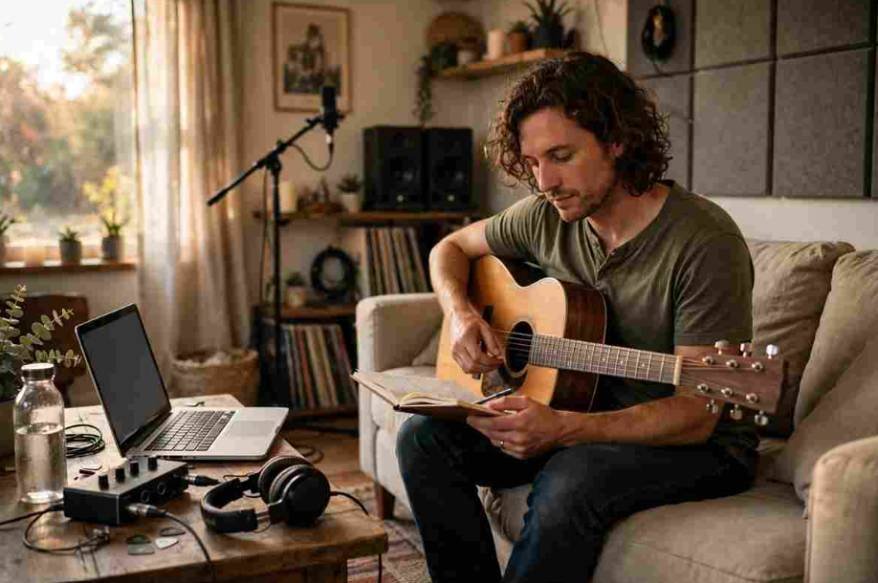
Start with the payment schedule, music recording budget, royalty rate, and the revenue base used to calculate your share. Check which expenses the label can recoup, whether those costs have caps or require approval, and when you’ll receive statements. Then look at who owns or controls the masters, how long those rights last, and whether the label has options for additional releases.
If the deal includes funding for a music video, make sure you understand whether that amount comes from the advance or is provided separately. Learning how independent artists budget for a music video can help you estimate production costs, allocate funds carefully, and avoid taking on expenses that make an already recoupable advance harder to clear.
Two offers with the same advance can leave you with very different cash at signing, royalty income, and control over your recordings. Ask an entertainment attorney to walk through the contract with you, including what happens if the label delays the release or declines to exercise an option.
Frequently Asked Questions
1. In a first deal, how do record label advances work for new artists?
The label provides funding upfront, sometimes in installments. Your share of the recording royalties covered by the contract typically reduces the recoupable balance. Once it clears, additional royalties can be paid on the agreed schedule.
2. Can a label recoup an advance from songwriting royalties?
A traditional recording advance is generally recouped from the artist’s share of income tied to the master recordings. Songwriting royalties come from the underlying composition. If you’re signing a separate publishing agreement or a deal that covers multiple income streams, check which earnings each agreement allows the company to use.
3. Is a bigger advance always a better deal?
A larger advance gives you more upfront funding and can take longer to recoup. Compare how much cash you’ll actually receive, the royalty rate, the expenses the label can charge, and how long it controls the masters.
What I’d Look For in the Offer
Whenever someone asks me how do record label advances work for new artists? I’d start by putting the offer and a sample royalty statement side by side. I’d mark what gets paid at signing, what’s committed to recording, and what the label can recover later.
Then I’d run the numbers for both a modest release and a strong one. That shows me whether the deal gives the artist enough money to finish the record and what it would take to start receiving royalties.