
Walking into a crowded room, you instantly recognize a close friend’s voice before you even see their face. That exact phenomenon is the magic of sound identity at work. When we explore what is timbre in music, we are diving deep into the literal color of sound that allows your brain to tell a jagged electric guitar apart from a warm, breathing acoustic violin.
Key Takeaways
- Timbre is the unique texture, color, and personality of a sound wave that distinguishes it from others.
- It operates completely independently of pitch, loudness, and duration while shaping emotional depth.
- Physical materials, historic construction, and acoustics determine the organic tonal qualities of instruments.
- Sound envelopes (ADSR) dictate how a sound attacks and decays, changing its identity.
- Digital production tools like saturation, filters, and clipping let you artificially sculpt timbre.
Decoding the Hidden DNA of Sound Texture
The concept of sound quality dates back centuries, but it was formalized during the nineteenth century by European scientists who wanted to understand why identical musical notes felt so vastly different to the human ear.
In the classical era, composers like Wolfgang Amadeus Mozart explicitly chose specific woodwinds over strings to elicit precise physical sensations from the audience. A flute might feel light and airy, while an oboe feels piercing and nasal, even when they play the exact same pitch.
This happens because no natural sound is a single, pure wave; instead, it is a complex cocktail of multiple frequencies dancing together simultaneously. When an instrument creates a sound, it produces a fundamental frequency, which is the baseline note your brain identifies, along with a hidden ladder of quieter frequencies known as overtones or harmonics. The unique layout and volume of these overtones are what give an instrument its distinct identity.
The Physics of Harmonics and Overtones
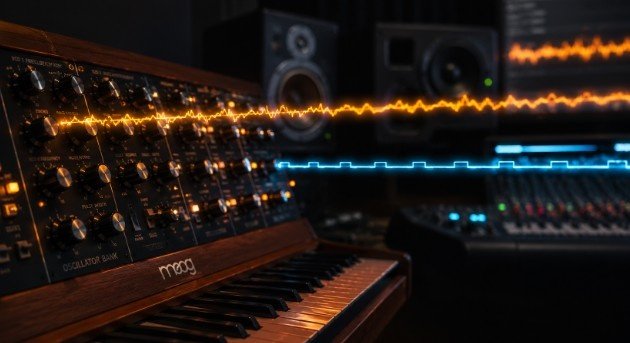
Every acoustic or digital sound source relies heavily on how its upper frequencies are structured across the human hearing spectrum.
When a grand piano string vibrates, it naturally splits into multiple smaller vibrating sections that create mathematical multiples of the baseline frequency. If the instrument emphasizes even harmonics, the overall sound quality translates to our ears as exceptionally smooth, sweet, and warm. On the flip side, instruments or electronic circuits that emphasize odd harmonics tend to sound hollow, reedy, or delightfully buzzy.
The Shape of Time and the Sonic Envelope
Musicians and audio engineers track this sonic journey using an envelope keeping in mind music royalties, which is broken down into four distinct phases: attack, decay, sustain, and release. A sharp, explosive attack from a struck snare drum creates an entirely different textural impression than the slow, swelling attack of a bowed cello.
If you edit the sharp attack off a piano recording, your brain will actually struggle to identify it, often mistaking it for a strange reed organ.
Material World and Physical Acoustics
Historically, the transition from wooden flutes to metal flutes in the nineteenth century drastically altered the sonic texture of orchestras, shifting the sound from a dark, earthy tone to a brilliant, cutting sheen.
The density of aged maple wood, the thickness of brass plating, or the tension of a synthetic drumhead all act as physical filters that boost or suffocate specific overtones. This physical reality explains why a legendary Stradivarius violin carries a legendary sonic signature that modern machines still struggle to replicate completely.
Why Timbre in Music Your New Secret Superpower
Imagine living in a world where every single color was just a flat, boring gray. That is exactly what music would sound like without acoustic texture, which is why understanding what is timbre in music is essential for every creator. It transforms simple notes into a vivid emotional canvas, saving your tracks from sounding like generic computer bleeps.
The Evolution of Tone Color Across Music History
During the Renaissance, instruments like the lute and the harpsichord were designed with highly delicate, plucked textures that suited small, intimate stone chambers. As public concerts grew larger during the Romantic era, instrument builders redesigned brass and woodwind instruments to sound increasingly bright and powerful so they could easily cut through massive performance spaces.
This historical arms race for sonic presence fundamentally shifted the types of textures that audiences associated with emotional storytelling.
By the time the twentieth century arrived, innovators like Leo Fender traded acoustic resonance chambers for solid blocks of wood and magnetic pickups, birthing the electric guitar. This shift completely liberated sound quality from the constraints of physical materials, allowing musicians to use amplifiers to distort their waves intentionally.
Suddenly, a single instrument could morph from a clean, jazz texture into a roaring, aggressive heavy metal growl at the stomp of a foot pedal.
The Rise of Digital Synthesis and Wave Shaping
Electronic music producers use synthesizers to build entirely new sonic signatures from scratch by choosing between square, triangle, or sawtooth waves. Each geometric waveform boasts a hyper-specific harmonic configuration that can sound frozen and robotic or warm and vintage. By using digital wave-shapers, a modern creator can mimic the exact acoustic properties of ancient instruments or invent textures that have never existed in nature.
The Role of Psychoacoustics in Modern Production.
Human ears are naturally tuned to hear the frequencies where human speech resides, making us incredibly sensitive to subtle changes in the mid-range spectrum. In modern pop music, producers will intentionally boost the upper-mid frequencies of a vocal to give it an intimate, close-up texture that feels like the singer is whispering directly into your ear.
Managing these subtle shifts in sound color is the secret key to crafting a balanced, professional mix that translates across various playback systems.
Sculpting Your Sound Palette Like an Expert
Manipulating sound color effectively requires a strategic mix of performance techniques and smart studio processing tools.

To master your sonic textures and apply what is timbre in music, start by exploring how physical performance changes the underlying wave shape before you ever reach for a digital plugin. If you are a guitarist, picking closer to the bridge naturally starves the fundamental frequency and boosts bright, metallic overtones, while strumming near the neck yields a thick, round texture.
Vocalists can achieve similar results by shifting their resonance from the deep chest cavity up into the nasal passages to cut through dense arrangements.
In the digital domain, your primary tool for reshaping sound to color is the equalizer, which allows you to sculpt the harmonic balance with surgical precision. Instead of simply turning the volume up, try boosting a narrow band of high-end frequencies to add an airy, premium sheen to a dark acoustic guitar.
Additionally, applying a touch of analog tape saturation will generate pleasing new harmonics, instantly transforming a cold, sterile digital track into a rich, cohesive, and vintage masterpiece.
Frequently Asked Questions
1. What is an example of a timbre?
An excellent example of this property is hearing the exact same middle C note played back-to-back on a grand piano and a saxophone, where the piano sounds bright and percussive while the saxophone sounds breathy, warm, and reedy.
2. What are the three types of timbre?
While infinite variations exist across the acoustic world, musicians generally categorize these sound textures into three primary domains, which are vocal timbres, traditional acoustic instrument timbres, and electronically synthesized or processed digital timbres.
3. What is the difference between tone and timbre?
Tone generally refers to the specific pitch or a broad aesthetic description like bright or dark, while the concept of what is timbre in music encompasses the entire complex physical identity, harmonic structure, and envelope of the sound.
4. What is the difference between pitch and timbre?
Pitch is the specific frequency of a note that tells you how high or low it sits on a scale, whereas the concept of what is timbre in music tells you which specific instrument or voice is actually playing that note.
Drop the Mic and Paint Your Masterpiece
Mastering the beautiful complexities of what is timbre in music completely transforms how you listen to, perform, and produce songs. By recognizing how history, physical materials, and overtones shape our favorite tracks, you gain the ultimate creative superpower to paint your own breathtaking sonic landscapes. Keep experimenting with different textures, trust your ears, and let your unique musical voice shine through.