
The first time I walked into a venue office at 1:30 AM to settle a sold-out club show, I expected a thick envelope of cash. Instead, the talent buyer handed me a printout showing we owed them forty dollars after expenses.
Understanding revenue sharing models between touring artists and live music venues saved my touring career from financial ruin. Whether you book emerging indie bands or manage a mid-sized rock club, knowing how ticket dollars, bar tabs, and merch cuts get divided determines who absorbs the financial risk on a slow Tuesday and who captures the upside on a packed Friday.
The Five Core Ticket Revenue Deals I Negotiate on Tour
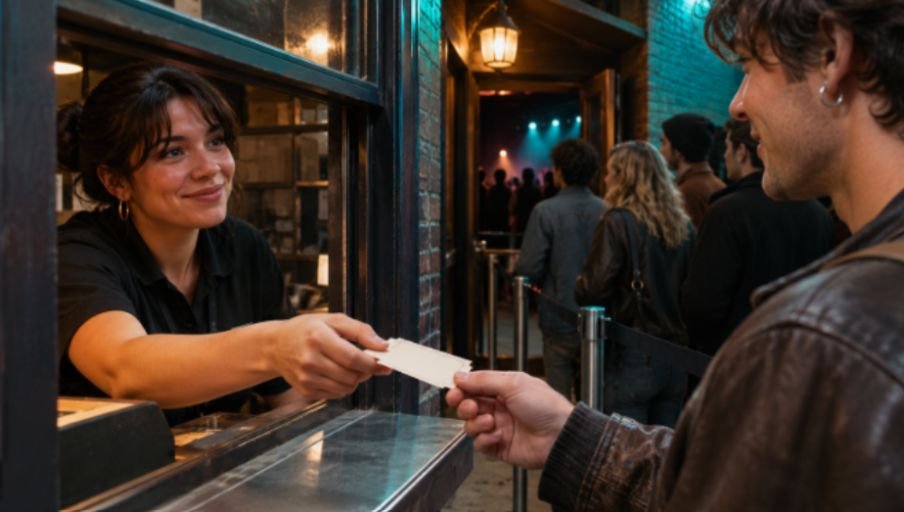
Every live music contract boils down to how ticket sales get split between the talent and the room. Over twelve years of tour managing across the US, I have seen almost every offer fall into one of five standard buckets.
| Deal Structure | How It Works | Risk & Reward Profile | Typical Use Case |
| Flat Guarantee | Artist receives a fixed, pre-negotiated fee regardless of attendance. | Venue assumes 100% of box office risk and keeps all ticket upside. | Support acts, corporate gigs, or established draws. |
| Door Split (Door Deal) | Ticket revenue splits by percentage (often 70/30 or 80/20 favoring the artist). | Artist absorbs attendance risk; low turnout means minimal pay. | Grassroots clubs, local showcases, and early tours. |
| Versus Deal | Artist earns whichever is higher: a base guarantee or 80%–85% of net ticket sales. | Protects the artist with a floor while sharing sold-out upside. | Mid-level touring acts with proven ticket history. |
| Guarantee Plus Bonus | Artist gets a base guarantee plus a percentage once the venue hits break-even. | Venue covers operating costs first; both share profits above break-even. | Developing acts scaling into larger rooms. |
| Four-Wall / Room Hire | Artist rents the venue for a flat fee and keeps 100% of ticket sales. | Artist carries all production risk and costs, keeping all ticket profit. | Album release shows, independent promoters, new markets. |
Flat Guarantees vs. Door Splits
When I route an opening act across the Midwest, I push hard for a flat guarantee. You know your exact gas and hotel budget before leaving home, and the promoter carries the marketing burden.
Conversely, grassroots clubs rely on door splits because independent rooms operate on razor-thin margins, a reality documented extensively by the National Independent Venue Association (NIVA). In an 80/20 door deal, you earn 80% of the door receipts. If forty fans show up in a snowstorm, you split a tiny pot. If you pack the room, you walk away with far more than a rookie guarantee would ever pay.
Versus Deals and Guarantee Plus Bonus Structures
Once an act can reliably pull 250 to 500 paid fans in a market, I transition our offers to a Guarantee vs. Percentage (Versus Deal). You lock in a safety net—say, $2,000—against 85% of net ticket sales. You never lose money on an off night, yet a sold-out room triggers a lucrative backend bonus.
Guarantee plus bonus structures work similarly, though they protect the house first. The venue clears its fixed operating expenses before your bonus percentage kicks in. Both models require sharp promotion on your end, which is why pairing tour dates with cost effective social media ad strategies often pays for itself ten times over at settlement.
Four-Wall Room Hires for Album Releases
In a four-wall deal, you essentially become the promoter. You pay a flat rental fee for the empty room—sometimes including basic sound and lights, sometimes not—and keep every dollar from the box office. I only recommend four-walling in hometown markets where you already command a loyal fanbase and don’t need the venue’s built-in calendar traffic to sell tickets.
How Settlement Math Actually Works (A Worked 400-Cap Example)

Reading the deal memo is only half the battle. The real money is won or lost on the settlement sheet at the end of the night.
The same focus on measuring financial returns applies to music promotion, where artists can assess whether their marketing spend generates meaningful engagement and streams by learning how to calculate ROI on Spotify playlist pitching campaigns.
Gross vs. Net Splits and the Infamous “House Nut”
A gross split pays your percentage starting from the very first ticket sold. They are rare. Almost every club deal is a net split, meaning the venue subtracts its fixed show expenses—known in the industry as the “house nut”—before calculating your cut.
Here is how a real $1,500 vs. 80% net versus deal plays out in a 400-capacity US club at $25 per ticket:
- Gross Box Office (350 tickets sold @ $25): $8,750
- Less Credit Card & Ticketing Fees (6%): -$525
- Adjusted Gross Receipts: $8,225
- Less Agreed House Nut (Sound, Security, Door Staff, Advertising): -$2,800
- Net Split Pool: $5,425
- Artist’s 80% Share: $4,340
Because $4,340 beats your $1,500 guarantee, you walk out with $4,340. However, if that venue quietly padded the house nut with unapproved marketing charges or inflated stagehand hours, your payout shrinks dollar for dollar. Always request an itemized house nut cap in your contract before advancing the show. Reviewing your performance agreements carefully is a core part of sound small business financial management.
Promoter Profit Deductions and Ticket Thresholds
On larger theater runs, watch out for promoter profit deductions. Under this structure, the promoter deducts all show expenses plus an automatic promoter profit—typically 15% of total expenses—before splitting the remaining net pool. On small club door deals, watch for ticket thresholds, where the venue keeps the first 30 to 50 tickets sold to cover basic staffing before your percentage begins.
Secondary Live Show Income: Merch, Bar Cuts, and PRO Royalties
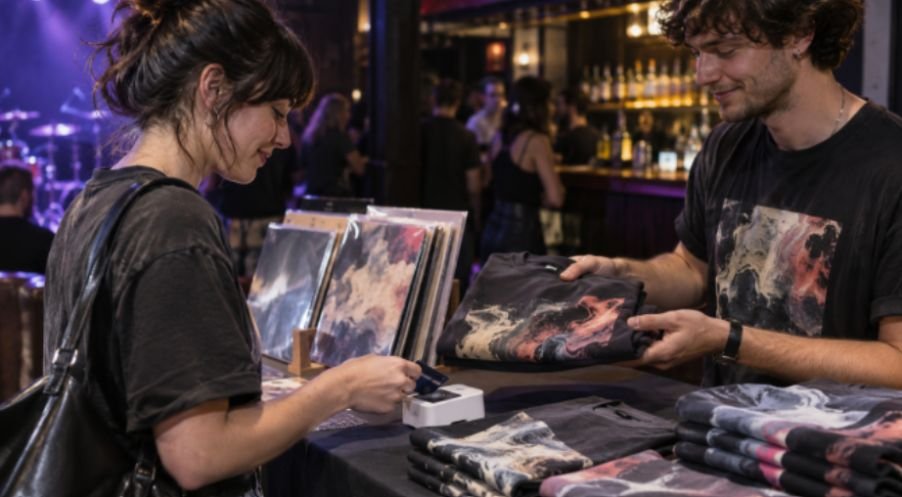
Just as modern media outlets generate revenue by diversifying beyond simple subscriptions, smart touring acts treat ticket sales as just one pillar of tour income.
Protecting Your Merchandise Margins
At independent 200-cap clubs, you set up a folding table in the corner, run your own Square reader, and keep 100% of your merch sales. Once you step up to mid-sized theaters and Live Nation rooms, venues routinely charge a merch rate of 10% to 25% on gross soft-goods sales (shirts and hoodies) and 10% on recorded media.
I always negotiate merch cuts before signing the deal memo. If a venue insists on a 20% cut because they supply a merch seller, ask to waive the fee by bringing your own seller, or cap the house cut at 10% after state sales tax.
Food, Beverage, and Performance Royalties
Venues almost universally keep 100% of bar and food sales. High-margin drinks are what keep the lights on when ticket splits heavily favor the band. The only exception I have encountered is in neighborhood dive bars where an acoustic act plays for free in exchange for 10% to 15% of the bar ring during their set.
Finally, never leave your live performance royalties unclaimed. US venues pay annual blanket licensing fees to Performing Rights Organizations like ASCAP and BMI. When you perform original songs live, you earn royalties from that pool—but only if you log your setlists through ASCAP OnStage or BMI Live after each run.
Stop Leaving Door Money on the Table at 1 AM
Venue contracts are written to protect the building first, not your tour van’s gas tank. Before your next run, pull up your upcoming deal memos, highlight the exact house nut figure, and confirm whether your merch cut is calculated before or after sales tax. A ten-minute phone call with the talent buyer two weeks before load-in can easily put an extra $500 in your pocket on show night.
Frequently Asked Questions
1. What is a standard door split for a new touring band?
Most independent US clubs offer a 70/30 or 80/20 split favoring the artist after the house nut is deducted.
2. What does “house nut” mean in a live music contract?
The house nut is the venue’s fixed nightly operating cost—covering sound engineers, security, and door staff—deducted before ticket splits occur.
3. Do music venues take a percentage of band merchandise sales?
Small clubs rarely take a cut, while larger theaters and amphitheaters typically charge 10% to 25% of gross merch revenue.
4. How do touring artists collect royalties for live performances?
Artists submit their live setlists and venue dates directly to their Performing Rights Organization, such as ASCAP or BMI, to claim blanket license distributions.