
Three boxes of unsold medium-sized T-shirts sitting in my hallway taught me my hardest lesson in independent music. When I first started helping indie artists launch apparel lines, we guessed at designs, ordered 150 screen-printed shirts upfront, and watched dead stock wipe out an entire tour’s profit. Successfully building a profitable music merchandise brand for indie bands requires validating demand with zero inventory risk before committing a single rupee or dollar to bulk manufacturing.
Streaming payouts alone rarely cover van gas, studio time, or promo budgets—even after you learn how to calculate ROI on Spotify playlist pitching campaigns. Physical merch remains the highest-margin revenue engine an independent act controls. Below is the exact playbook I use to turn simple band shirts into a self-funding streetwear label.
Choosing Your Production Model Without Killing Cash Flow
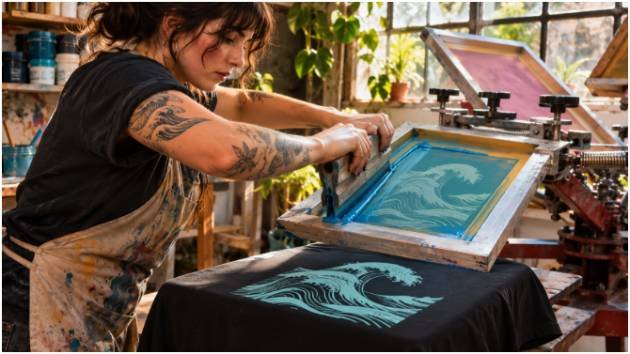
Your production method determines both your upfront cash risk and your net profit margin. Early in my career, I treated print-on-demand (POD) and screen-printing as an all-or-nothing choice. Today, I run a strict hybrid pipeline that uses POD as a testing lab and bulk printing as a profit multiplier.
Print-on-Demand vs. Bulk Screen-Printing Unit Economics
According to Printful’s 2026 print-on-demand profit margin benchmarks, most POD sellers clear 20% to 40% margins without holding stock. Bulk screen-printing pushes margins past 60%, provided you actually sell the batch.
| Metric | Print-on-Demand (POD) | Bulk Printing (Screen Print / DTF) |
| Upfront Cash Outlay | $0 (fulfilled per order) | 500–1,500+ per production run |
| Unit Cost (Heavyweight Tee) | ~12–16 per shirt | ~5–8 per shirt (48+ units) |
| Target Gross Margin | 20%–35% | 50%–65%+ |
| Best Use Case | Testing new artwork, online stores | Proven bestsellers, live tour booths |
The 30-Unit Validation Rule in Practice
I never send an unproven graphic to a local screen-printer. Instead, I upload the artwork to a POD partner first and enforce what I call the 30-Unit Validation Rule. Once a single design sells 30 to 40 units online at full retail price, it graduates to a bulk print run of 50 to 100 units.
The break-even math explains why this threshold saves bands from bankruptcy. If you print 100 shirts at 7each(700 total) and retail them at $30, you need to sell 24 shirts just to recover your printing bill. Factoring in shipping, packaging, and payment fees, bulk printing only outperforms POD once you sell roughly 72% of your inventory batch. Ordering 20 units across 15 different SKUs will let screen setup fees erase every cent of profit.
Curating a Tight, High-Margin Merch Lineup
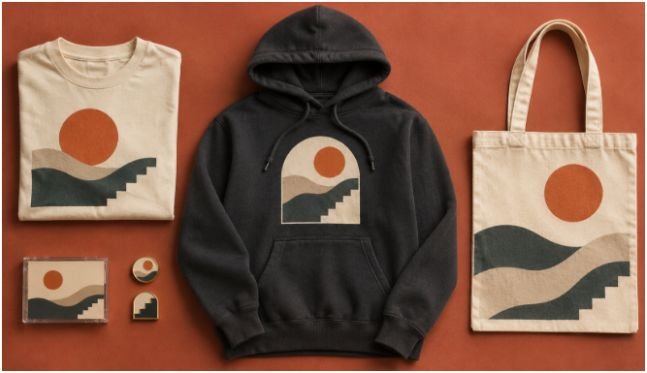
Choice overload kills conversion rates both online and at crowded venue booths. Whenever I audit an underperforming artist store, I immediately trim their catalog down to three to five core items.
Core Streetwear Staples That Drive Revenue
Heavyweight graphic T-shirts (retailing at 30–35) and pullover hoodies (55–65) anchor every profitable catalog I manage. Fans perceive hoodies as premium outerwear rather than basic souvenirs, giving you room for a $30+ gross profit per unit. Keep your sizing run weighted toward Large and Extra-Large, which consistently account for over 55% of indie apparel orders.
Low-Cost Impulse Add-Ons and Physical Media Bundles
High-ticket apparel drives revenue, while small accessories boost your average order value (AOV):
- Impulse Accessories: Woven patches, die-cut vinyl stickers, enamel pins, and canvas totes cost $1 to $4 to manufacture and easily sell for $5 to $20 at checkout.
- Collectible Bundles: Pairing a heavyweight tee with a limited-run cassette, vinyl pressing, or signed lyric zine lets you price a bundle at $50 to $65 while moving physical music alongside apparel.
Designing Merch Fans Actually Wear Outside Shows
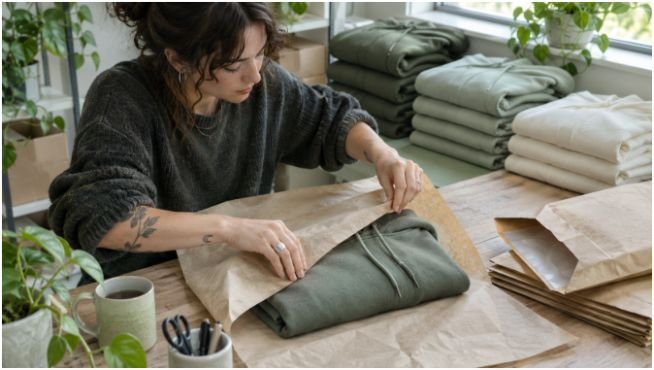
Fans rarely want to walk around grocery stores looking like a human billboard for a local band. As highlighted in Shopify’s guide to creative brand merchandise, the highest-converting merch reflects a distinct aesthetic and lifestyle rather than plastering a giant logo across the chest.
I advise bands to build graphics around evocative lyric snippets, vintage bootleg tour aesthetics, or original album illustrations. Tuck the band name discreetly onto the sleeve cuff, back neck tag, or lower hem. When a stranger compliments the artwork on the street, your fan gets to brag about discovering your music organically.
Upgrading Garment Blanks for Premium Pricing
Cheap, boxy promo tees shrink after two washes and end up as gym rags. Upgrading from a basic tubular tee to a 6.5 oz heavyweight combed cotton blank or a soft ring-spun garment adds $2 to $3 to your unit cost. That tiny upgrade justifies a $35 retail price tag and turns one-time buyers into repeat collectors.
Setting Up Direct-to-Fan Online and Live Sales Channels
Relying on third-party marketplaces surrenders your customer data and eats into your margins. I always build a dedicated direct-to-consumer storefront on Shopify alongside an integrated artist profile using Bandcamp’s artist and label merchandise overview. Owning your email list lets you market future drops directly to proven buyers without paying social media ad taxes.
Running Zero-Risk Pre-Order Drops
Specialized items like custom puff-print hoodies, embroidered dad hats, or tie-dye garments carry high production minimums. Run a strict seven-day pre-order window on your website instead of gambling on inventory. You collect customer cash upfront, lock in exact size counts, and manufacture only what is already paid for.
Maximizing Revenue at the Live Merch Table
Live shows remain the fastest way to convert casual listeners into superfans, provided your booth removes buying friction. Display bold, legible price signs so fans do not have to shout over the opener to ask what a hoodie costs. Always accept mobile tap-to-pay alongside cash, and offer a simple show bundle—such as a tee plus a tote bag for $40—to lift revenue per attendee.
Protecting Brand Trademarks and Artist Royalty Splits
If you are building a profitable music merchandise brand for indie bands as a standalone label or collective, protect your intellectual property before scaling. Review USPTO’s official trademark guide for musicians to register your brand name and original logos in Class 25 (clothing) before counterfeiters or similarly named acts block your growth.
Never use unauthorized bootleg fonts, movie stills, or corporate parodies without clearance, as music copyright infringement laws apply just as strictly to apparel graphics as they do to audio samples. When partnering with outside bands under a merch label, sign a short licensing contract upfront. Standard independent deals split net profits 50/50 after production costs or pay the artist a 15% to 25% gross royalty on every unit sold.
Stop Leaving Tour Money on the Table
Treating merch as an afterthought guarantees thin margins and closets full of unsold medium tees. Pick your strongest visual concept this week, upload it to a print-on-demand storefront on a heavyweight blank, and let your first 30 buyers fund your next bulk screen-print run.
Frequently Asked Questions
1. How much money do you need to start an indie band merch brand?
You can launch with $0 in inventory costs using a print-on-demand storefront, or $500 to $1,500 for an initial bulk screen-printing run.
2. What is a good profit margin for indie band merchandise?
Aim for 20% to 35% net profit on print-on-demand items and 50% to 65% or higher on bulk screen-printed apparel.
3. Which merch items sell best for independent bands?
Heavyweight graphic T-shirts, pullover hoodies, and low-cost impulse add-ons like enamel pins, stickers, and canvas totes consistently generate the highest sales volume.
4. Should indie bands use print-on-demand or screen-printing?
Start with print-on-demand to test new designs with zero risk, then switch to bulk screen-printing once a design sells 30 to 40 units.