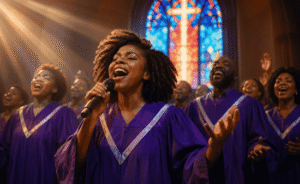
Walking through a modern concert venue, you can easily feel the visceral, heavy bass shaking the floorboards and unifying a room of strangers. Music has this uncanny, transcendent power to alter human moods in a single heartbeat, making it feel entirely supernatural. It makes perfect sense that ancient civilisations assumed a literal immortal entity must be pulling the strings behind these moving acoustic arrangements.
Key Takeaways
- Apollo holds the official title of the god of music in classical Western mythology.
- The mythical seven-stringed lyre represents the foundation of harmonic intervals and early music theory.
- Ancient civilisations viewed musical frequencies as a divine force capable of physical healing.
- Historical musical contests served as the earliest predecessors to modern competitive music festivals.
- Integrating mindful acoustic instrumentation can directly mimic ancient sound therapy practices in modern daily life.
Why Do We Need a Divine Symphony Master Anyway?
Unearthing the history behind who is the god of music serves a fascinating purpose in our modern playlists. It helps us understand why humans are so deeply hardwired to seek out rhythm, harmony, and community through sound. Discovering these legendary cosmic figures connects our current streaming habits directly to ancient, historical soundscapes.
The Ultimate Ruler of the Western Scale
The golden standard of musical divinity across European history belongs entirely to one prominent Olympic deity.
The Rise of Apollo and the Mythic Seven-Stringed Lyre
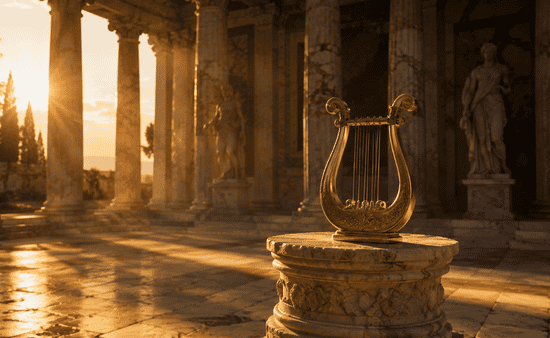
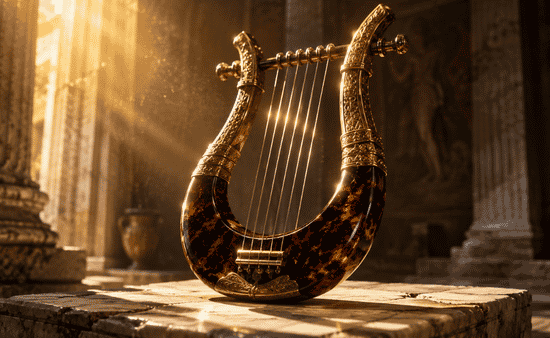
Classical Greek mythology names Apollo as the supreme deity governing melodies, rhythm, and creative poetry. The young trickster god Hermes actually stumbled upon the very first lyre by stretching animal hides across an empty tortoise shell.
Looking to settle a fierce family dispute, Hermes traded this innovative stringed creation over to his brother Apollo. The young god instantly mastered the instrument, forever linking his divine identity to the sweet resonance of strings.
The Nine Muses and the First Orchestra
Apollo did not perform his sonic masterpieces in absolute isolation on Mount Olympus. He actively led the Nine Muses, a collective of divine sisters who each governed distinct creative fields like dance, tragedy, and song.
Together, this mythological ensemble functioned as the ancient world’s very first symphonic orchestra. They set the rhythmic standard for how mortals would structure artistic expression for centuries to come.
The Terrifying Stakes of Mythological Music Battles
Challenging the supreme deity of melodies to a creative riff-off carried exceptionally brutal consequences. A boastful satyr named Marsyas once claimed he could play the flute with far more beauty than the Olympian master. After losing the intense public contest, Marsyas faced a gruesome, fatal punishment from the victorious immortal.
Another judge named King Midas preferred a rustic panpipe tune over the elegant lyre, prompting Apollo to turn his human ears into donkey ears as a sign of terrible taste.
Global Soundscapes and Other Divine Melodymakers
Greek culture certainly holds a massive spotlight, but other ancient societies built their own legendary musical guardians.
The Goddess of Wisdom and Eastern Harmonic Arts
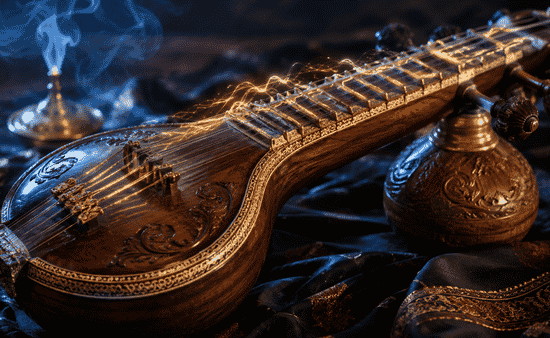
In Eastern traditions, Saraswati reigns supreme as the revered goddess of knowledge, wisdom, and the arts. She is traditionally depicted sitting elegantly while playing the veena, a sacred multi-stringed chordophone instrument.
Her celestial songs represent the pure flow of consciousness, creativity, and the absolute spiritual essence of classical performance. Beyond her grace, Lord Shiva is beautifully associated with cosmic music and the primordial rhythm of creation, while Lord Krishna is famously depicted charming the world with his transcendent flute playing.
Egyptian Rhythms and the Goddess of Joy
Travelling over to ancient Egypt reveals Hathor, a powerful solar deity who presided over joy, maternal love, dance, and music. She was frequently celebrated with the rhythmic shaking of the sistrum, a sacred metal rattle instrument used to ward off dark energies.
Musicians and dancers gathered at her temples to perform elaborate ceremonies, viewing her rhythmic spirit as the lifeblood of communal celebration.
Norse Poetry and the Bards of Valhalla
The freezing landscapes of Scandinavia introduced Bragi, the dedicated patron of eloquent poetry and master bards. He welcomed fallen warriors into the grand halls of Valhalla by singing epic tales of their courageous battle victories. His songs preserved the rich history of his culture, functioning exactly like a living, breathing audio archive.
The Celtic Bard and the Magic Harp
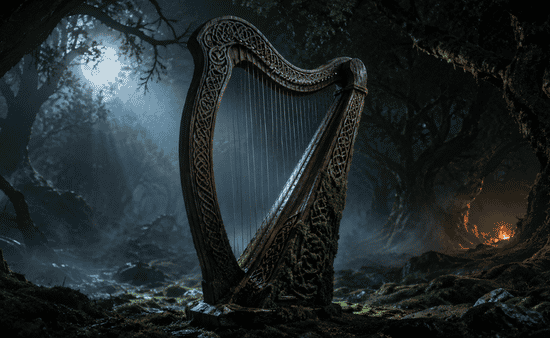
Deep within Irish and Celtic folklore, The Dagda rules as a powerful patriarch wielding a highly mystical instrument. His heavy oak harp possessed the unique ability to completely control the natural progression of human emotion.
A simple strum could plunge an entire army into weeping tears, wild laughter, or a deep, restorative sleep. This magical lore deeply mirrors how modern film scores manipulate our feelings during dramatic cinematic moments.
Monotheistic Traditions and the Ultimate Creator
In monotheistic belief systems such as Christianity, Islam, and Judaism, the singular Supreme Being is revered as the ultimate source of all creation. This includes the intricate beauty, physics, and spiritual harmony found within musical arrangements. Sound is viewed as a divine gift meant to uplift the soul, inspire devotion, and foster deep connection across humanity.
Ancient Harmonic Therapy for Your Modern Routine
Bringing the ancient concepts of sacred frequencies into your hectic weekly routine can completely transform your personal workspace dynamic. If you want to channel the focus of the ultimate historical maestro, applying the secrets of who is the god of music to your daily life can help ground your modern environment through sound.
Step 1: Select Your Acoustic Instrument of Choice
Begin by choosing a simple, purely acoustic instrument like a steel-tongue drum, a small lap harp, or a classical acoustic guitar. Avoid digital synthesizers or heavily processed MIDI tracks to stay aligned with traditional acoustic vibrations.
Step 2: Establish a Dedicated Sonic Sanctuary
Set up a quiet, distraction-free corner of your room completely devoid of digital screens or buzzing smartphones. Dedicate this physical space solely to raw, unedited listening experiences or active instrument practice.
If you’re observing a fasting routine, you may wonder, does listening to music break your fast? The answer is no—listening to music does not affect a fast, making it a relaxing activity that can help you stay focused and calm during your fasting period while enjoying uninterrupted practice or mindful listening.
Step 3: Implement the Ancient Five-Minute Harmonic Decompression
Sit comfortably and pluck single notes slowly, allowing the natural ring and decay of the strings to fade into complete silence before striking the next chord. Focus your entire attention on the physical vibration moving through the air, using the resonance to intentionally slow down your resting heart rate.
Frequently Asked Questions
1. Who is known as the god of music?
Apollo is universally recognized as the classical god of music, poetry, and archery in Western history. He governed the creative arts across both ancient Greek and Roman societies, utilizing his signature golden lyre to inspire mortal musicians.
2. Is there a Greek god of music?
Yes, Apollo reigns as the Olympian Greek god of music and harmonic order. He directed the legendary Nine Muses and protected all historical performers, setting the foundation for early Western music culture.
3. Is Zeus the god of music?
No, Zeus is the king of the gods and ruler of lightning, not music. However, he is the proud father of Apollo, who holds the official title of the divine musical master.
4. Who is the ancient god of music?
Apollo stands as the most prominent ancient god of music in Western history. Other ancient cultures worshipped parallel figures, like the Celtic harpist Dagda or the Norse poetic deity Bragi.
Encore for the Endless Symphony
Unearthing the history behind who is the god of music proves that our modern obsession with beats and hooks is deeply hardwired into human heritage. From Apollo’s ancient tortoise-shell lyre to the heavy festival speakers of today, the core pursuit remains completely unchanged. Music is a beautiful, timeless bridge connecting the mortal world to something grander, so keep your playlists diverse and your volume turned up.