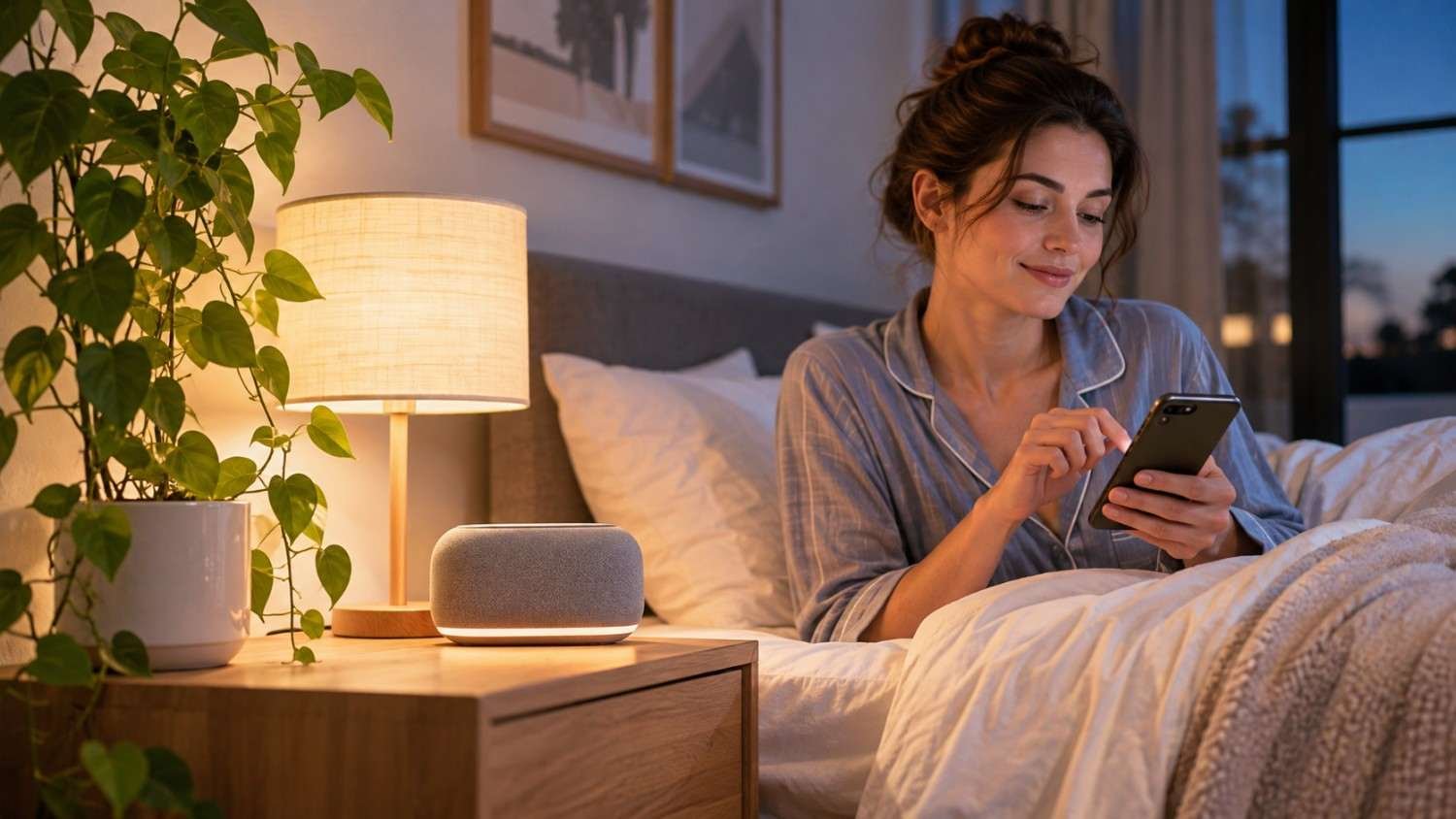
Is listening to music while sleeping healthy? Yes, relaxing music can help you fall asleep, reduce bedtime stress, and improve perceived sleep quality. However, playing loud music, wearing uncomfortable earbuds, or leaving songs running overnight may disrupt your rest.
I often find that a peaceful melody makes it easier to unwind after a busy day. But music that feels relaxing before bedtime isn’t necessarily beneficial throughout the night.
Understanding the benefits, possible side effects, and safest listening habits can help you decide whether bedtime music belongs in your sleep routine.
What Are the Health Benefits of Listening to Music While Sleeping?
Listening to calming music offers several potential benefits, particularly for adults who struggle with stress or occasional sleep difficulties.
Can Relaxing Music Lower Stress and Help You Fall Asleep?
Soft music may encourage physiological relaxation by influencing heart rate, breathing, and blood pressure.
According to UC Davis Health, relaxing music can help prepare the body for sleep.
Music may also influence stress-related cortisol responses and dopamine-related reward pathways, although these effects vary and aren’t guaranteed during bedtime listening.
I recommend choosing familiar, peaceful tracks that help your body transition naturally from daytime activity to nighttime rest.
Does Music Help Quiet Anxious Thoughts?
Music provides a gentle distraction from racing thoughts, work-related stress, and environmental disturbances.
For Americans dealing with busy schedules, traffic noise, or unpredictable work hours, a consistent bedtime playlist may create a reassuring nighttime routine.
Rather than concentrating on tomorrow’s responsibilities, you can redirect your attention toward soothing melodies.
Can Bedtime Music Improve Sleep Quality?
A Cochrane systematic review analyzed 13 studies involving 1,007 participants and found that music probably improves self-reported sleep quality among adults with insomnia symptoms.
However, evidence about sleep duration, nighttime awakenings, and other sleep outcomes remains less certain.
Music can support relaxation, but it shouldn’t replace medical treatment for persistent sleep problems.
Is It Bad to Sleep With Music Playing All Night?
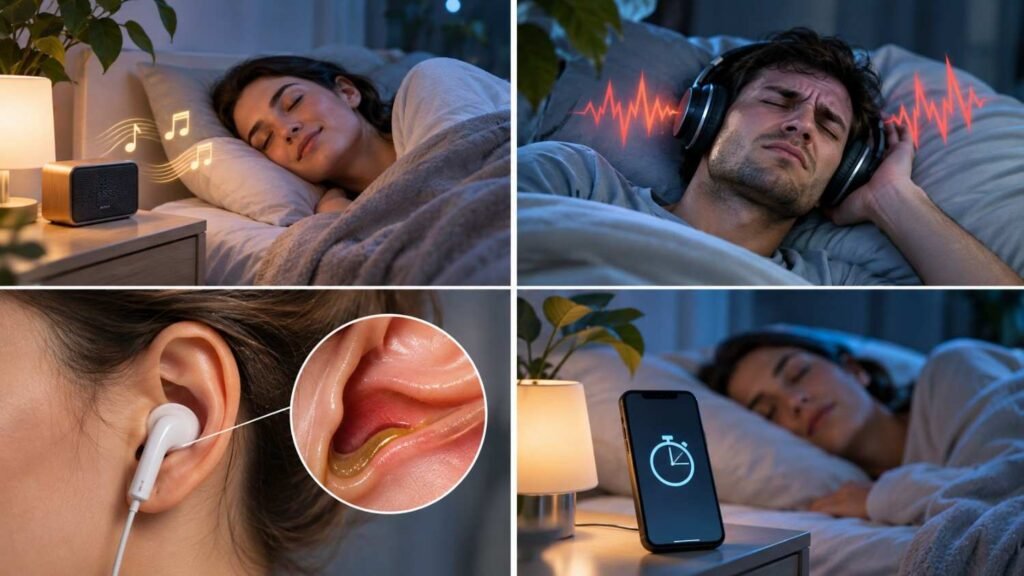
While music may help you fall asleep, continuous playback can sometimes interfere with restful sleep.
Sudden volume changes, advertisements, upbeat songs, and emotionally stimulating lyrics may cause nighttime awakenings.
Does Listening to Music While Sleeping Affect Your Brain?
Your brain can continue processing sounds during sleep, which makes music selection important.
A study published in Psychological Science investigated involuntary musical imagery, commonly called the earworm effect.
Researchers found that nighttime earworms were associated with poorer sleep. In one experiment, instrumental versions of familiar songs increased earworms and worsened objectively measured sleep outcomes.
You can read the original study published through the National Library of Medicine.
This doesn’t mean all instrumental music is harmful. However, catchy melodies that repeatedly play in your mind may prevent truly restful sleep.
Does Music Affect Deep Sleep and REM Sleep?
Deep sleep contributes to physical restoration, while REM sleep supports learning, memory, and emotional processing.
Although some research links bedtime music and earworms with disrupted sleep, scientists haven’t established that ordinary relaxing music consistently reduces deep sleep or REM sleep.
I suggest using a sleep timer instead of assuming overnight playback provides additional benefits.
Is Sleeping With Headphones or Earbuds Dangerous?
Sleeping with earbuds can introduce risks beyond interrupted sleep.
According to Cleveland Clinic, prolonged earbud use may increase the likelihood of irritation, earwax buildup, and ear-related problems.
Can Sleeping With Earbuds Cause Ear Infections or Hearing Damage?
Earbuds may trap moisture and irritate the ear canal, potentially contributing to infections.
They can also interfere with natural earwax movement, creating blockages or discomfort.
Excessive pressure from hard earbuds, especially when sleeping on your side, may cause tenderness or skin injury. Severe pressure-related tissue damage is uncommon and shouldn’t be considered an expected outcome.
Additionally, prolonged exposure to loud audio can damage hearing.
Can Noise-Canceling Headphones Create Safety Risks?
Noise-canceling headphones may make it harder to notice smoke alarms, emergency phone calls, or unusual sounds inside your home.
I generally prefer low-volume bedside speakers or comfortable pillow speakers over wearing earbuds throughout the night.
What Type of Music Is Best for Sleeping?
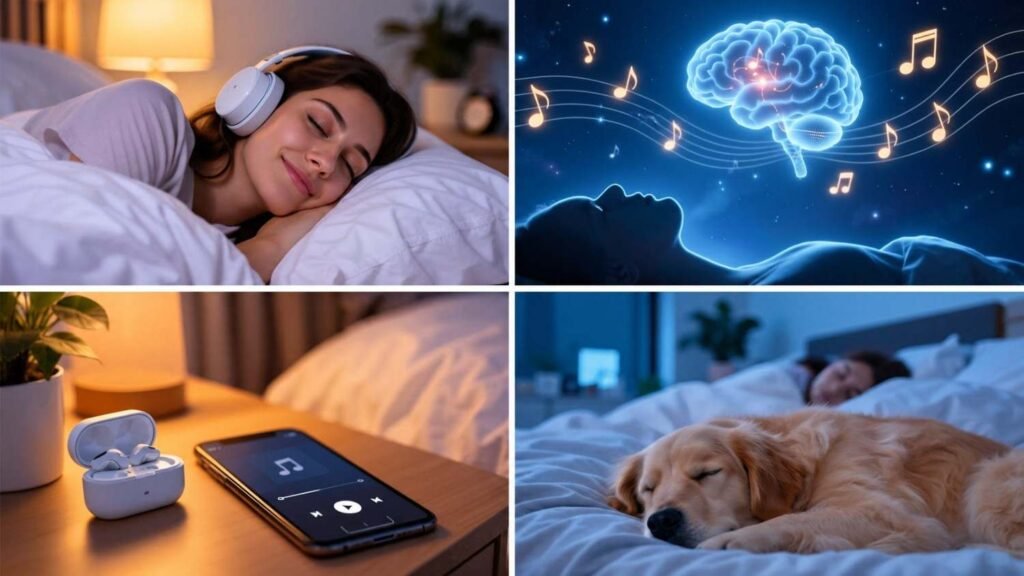
The best music to listen to while sleeping is calming, predictable, and personally enjoyable.
Gentle classical compositions, ambient soundscapes, soft piano music, acoustic tracks, and nature-inspired recordings are popular options.
Many sleep playlists feature slower tempos around 60–80 beats per minute. However, no single tempo guarantees better sleep.
Is Instrumental Music Better Than Music With Lyrics?
Instrumental music can feel less distracting because there are no lyrics to follow.
However, the earworm research suggests that instrumental versions of catchy songs aren’t automatically better.
I recommend avoiding emotionally intense songs, dramatic transitions, and melodies that repeatedly get stuck in your head.
How Can You Listen to Music Safely While Sleeping?
A few simple adjustments can make bedtime listening more comfortable and less disruptive.
Should You Use Speakers Instead of Earbuds?
External speakers are often preferable because they avoid prolonged pressure inside the ear canal.
Keep the volume low enough that you can still notice important environmental sounds.
A level around 60 decibels or lower may be a useful reference, but it isn’t a medically established bedtime threshold. Lower volumes are generally preferable when practical.
How Long Should You Listen to Music Before Sleep?
I recommend starting with a 30–45-minute sleep timer and adjusting it to your preferences.
Apps such as Spotify and Apple Music offer ways to stop playback automatically, depending on your device and settings.
A timer helps prevent unnecessary overnight playback without sacrificing the relaxation benefits of bedtime music.
Is Sleeping in Silence Better Than Listening to Music?
Neither option works best for everyone.
Some people prefer complete silence, while others find music or steady white noise more relaxing. If you’re wondering, can soft music help lower blood pressure, research suggests that calming melodies may support relaxation and modestly reduce blood pressure in some individuals.
Try each option for several nights and compare your sleep quality, nighttime awakenings, and morning energy.
Frequently Asked Questions (FAQs)
1. Is Listening to Music While Sleeping Healthy for Adults?
Yes, is listening to music while sleeping healthy is an important question for adults interested in better sleep. Gentle music may support relaxation and perceived sleep quality, but safe volume and listening habits matter.
2. Can Listening to Music Help With Insomnia?
Music may improve perceived sleep quality, but it isn’t a proven cure for chronic insomnia. Cognitive behavioral therapy for insomnia (CBT-I) remains a recommended first-line treatment.
3. Can Sleeping With Music Damage Your Ears?
Music played at a comfortable volume through speakers is generally low risk. However, loud headphone listening and prolonged earbud use may cause hearing or ear-canal problems.
4. Should You Leave Music Playing All Night?
Not necessarily. Listening before sleep may provide the relaxation benefits you need. A timer can prevent interruptions from changing songs, advertisements, or unexpected sounds.
Final Thoughts
So, is listening to music while sleeping healthy when practiced regularly? For many adults, it can be a helpful, inexpensive addition to a consistent bedtime routine.
I recommend choosing gentle music, avoiding uncomfortable earbuds, keeping the volume low, and turning playback off after falling asleep.
Ultimately, the goal isn’t to keep music playing longer. It’s to create a peaceful environment that supports refreshing, uninterrupted sleep.