
Standing in the middle of a crowded room while a heavy bassline vibrates through the floorboards instantly connects you to something massive. Tuning into that raw, unbridled energy is the easiest way to understand what is rock music without reading a single textbook. It is a universal sonic language that bypassed parental approval and reshaped the global cultural landscape forever.
Key Takeaways
- Rock music originated in the United States during the late 1940s by blending African-American rhythm and blues with country and gospel.
- The standard technical composition features a heavy backbeat in a standard $\frac{4}{4}$ time signature, amplified guitars, bass, and drums.
- Sociologically, the genre serves as an emotional lifestyle, a tool for youth rebellion, and a medium for social commentary.
- Classic sub-genres evolved quickly from early rockabilly into heavy metal, progressive rock, punk, and modern alternative sounds.
- Identifying rock today requires looking at both the structural instrumentation and the raw, expressive attitude behind the performance.
Why Knowing What Is Rock Music Matters Today
Unlocking the secrets of this legendary genre turns you into a certified sonic detective at your next concert. Instead of just nodding your head to a catchy beat, understanding what is rock music lets you decode the secret language of guitar riffs and drum fills.
It gives you immediate bragging rights among your vinyl-collecting friends and opens up a whole new world of deep listening. Plus, it is simply the ultimate way to appreciate how your favorite modern bands owe their entire sound to the musical rebels of the past.
The Cultural Roots of Rock and Roll
Long before stadium lights and wall-to-wall amplifiers existed, a beautiful cultural collision was taking place in urban centers and rural communities alike. The true architecture of rock music lies within the deep, emotional storytelling of African-American electric blues, gospel shouting, jazz, and the twang of traditional country music.
When the Great Migration brought these distinct regional sounds into northern cities, musicians began experimenting with faster tempos and heavier syncopation.

The Electrification of the Blues
Plugging acoustic instruments into primitive amplifiers changed the landscape of popular music overnight. Legendary icons like Muddy Waters and Sister Rosetta Tharpe took traditional blues progressions and made them louder, sharper, and noticeably faster.
This specific transition from acoustic delta sounds to heavy electric blues provided the direct blueprint for the early rock and roll explosion.
Alan Freed and Coining the Movement
Radio airwaves in the early 1950s were heavily segregated until an eccentric Cleveland disc jockey stepped in. Alan Freed noticed white teenagers buying rhythm and blues records, so he began broadcasting the tracks under a high-energy umbrella phrase.
Borrowing a rhythmic maritime term that had long been used in spiritual music and community dances, he officially introduced rock and roll to mainstream pop culture.
Musical Characteristics That Define the Genre
Dissecting the actual composition of a track reveals why this genre sounds so radically different from jazz or classical music.
At its core, the sonic identity relies on a relatively straightforward but incredibly powerful formula. While early ensembles prominently featured saxophones and boogie-woogie pianos, the mid-1950s shifted the spotlight toward portable, highly amplified instruments. This structural setup allowed small, independent groups of musicians to generate an astonishingly massive wall of sound without needing a full big-band orchestra behind them.
Decoding the Syncopated Backbeat
The rhythmic engine driving almost every single track is built on a standard $\frac{4}{4}$ time signature. Unlike traditional pop music that emphasizes the first and third counts, rock heavily accents the second and fourth beats using a sharp snare drum strike.
This specific emphasis is known musically as a backbeat, and it is the exact physical trigger that makes your head nod instinctively.
The Power of the Sonic Trinity
The classic instrumental lineup consists of a lead electric guitar, an electric bass guitar, and a drum kit. The lead guitar frequently utilizes electronic overdrive and distortion to deliver catchy riffs, while the bass guitar bridges the gap between rhythm and melody.
Together with the driving percussion, this trinity creates a highly energetic, dense texture that supports everything from melodic vocals to aggressive screams.
Major Subgenres and the Sonic Evolution
Watching the genre splinter into dozens of wild new styles shows just how adaptable it really is.
Classic and Hard Rock Mastery
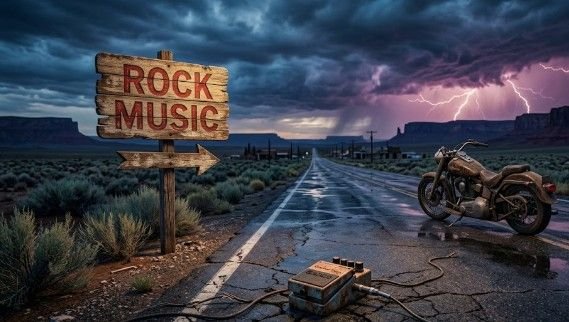
During the late 1960s and 1970s, bands pushed their gear to the absolute limit. This golden era brought massive guitar stacks, soaring vocal ranges, and complex stadium anthems courtesy of legends like Led Zeppelin and Queen.
The focus shifted heavily onto technical virtuosity, giving rise to the modern concept of the guitar god and the epic, multi-part album experience.
Punk Rock and Anti-Establishment Energy
By the late 1970s, a counter-movement emerged that stripped away all the theatrical pretense. Punk rock was fast, intentionally messy, and proudly anti-establishment, proved perfectly by bands like The Ramones.
You did not need to be a musical prodigy to play punk, you just needed three basic chords, a loud amplifier, and something meaningful to scream about.
Grunge and Alternative Realism
In the early 1990s, the Pacific Northwest birthed a moody, sludgy sound that completely redefined mainstream radio. Grunge acts like Nirvana and Pearl Jam traded flashy stage outfits for simple flannel shirts and highly introspective, vulnerable lyrics.
This alternative movement combined the raw aggression of punk with the heavy, buzzing guitar tones of classic metal.
What Is Rock Music? Live Application Tips
Training your ears to identify these specific elements out in the wild is incredibly satisfying.

Spotting the Core Rhythmic Foundation
Identifying the genre, like in indie music in everyday life comes down to analyzing the structural composition and execution of a song. If you want to master the art of recognizing rock music instantly, practice these four straightforward observation steps during your next listening session:
Listen closely to the percussion to locate a repetitive, driving rhythm where the snare drum cracks loudly on beats two and four.
Focus your ears on the stringed instruments to check if the main melodies are carried by a heavily amplified or distorted electric guitar.
Analyze the overarching structural blueprint of the track to see if it follows a traditional verse-chorus-verse format featuring a dedicated instrumental solo in the middle.
Evaluate the vocal delivery and general attitude of the track to determine if the performance prioritizes raw emotional expression over pristine vocal perfection.
Frequently Asked Questions
1. What defines music as rock?
Rock is defined by a prominent $\frac{4}{4}$ backbeat, heavy reliance on amplified electric guitars, and an emphasis on authentic, high-energy live performance. It inherently blends structural blues progressions with a distinct, rebellious attitude that challenges traditional norms.
2. What qualifies as a rock song?
A song qualifies if it features the core instrumentation of electric guitar, bass, and drums playing a syncopated rhythm. It typically utilizes a verse-chorus layout and highlights instrumental showcase moments like blazing guitar solos or driving basslines.
3. How do you know if a song is rock?
You can identify it by listening for distorted guitar riffs, driving snare percussion on the off-beats, and passionate, expressive vocals. The track will feel physically energetic and authentically human rather than heavily synthesized or mechanically polished by computers.
4. What are five characteristics of rock music?
The five core characteristics include a prominent $\frac{4}{4}$ backbeat rhythm, heavily amplified electric guitars, passionate or aggressive vocal styles. A traditional verse-chorus song structure, and lyrics centered on youthful independence or profound societal commentary.
Crank Up the Volume on Your Discovery
Stepping back and looking at the big picture reveals that learning what is rock music is more about catching a vibe than studying music theory. From the early electric blues pioneers to the stadium anthems of today, it remains the ultimate soundtrack for individual expression. Go grab your favorite headphones, cue up a classic playlist, and let that driving backbeat speak for itself.