Last spring, our studio lost a $35,000 video game sync placement forty-eight hours before contract signature. The culprit was not a mix flaw or a missed deadline, but a four-bar generative synth texture our producer forgot to replace. Understanding how AI music licensing and copyright laws impact studio revenue used to feel like a theoretical exercise for entertainment attorneys. Today, it directly dictates whether our studio gets paid or gets sued.
Generative audio tools slash demo turnaround times, yet they introduce massive legal friction downstream. If your studio operates without strict AI guardrails, you risk creating uncopyrightable masters that cannot earn sync fees, performance royalties, or clean streaming payouts.
Why AI Copyright Rules Freeze Sync Licensing Revenue
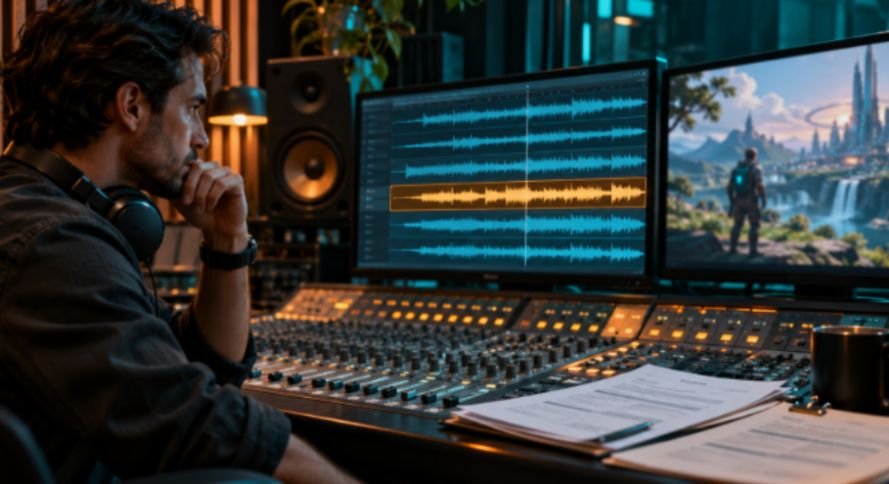
In my experience running commercial sessions in Los Angeles and Nashville, synchronization licensing remains the highest-margin revenue pillar for independent recording facilities. Unfortunately, current copyright law treats purely synthetic audio as toxic waste.
The Chain-of-Title Trap in Film, TV, and Gaming Placements
Under guidance from the U.S. Copyright Office, copyright protection requires human authorship. Works generated solely from text prompts lack a human creator and fall straight into the public domain.
Music supervisors at major film studios and game publishers demand bulletproof chain-of-title warranties before cutting a check. Because a 100% AI-generated track has no legal owner, nobody can grant exclusive clearance. Worse, standard sync agreements carry strict indemnification clauses. If an undisclosed AI sample triggers an infringement claim later, the producing studio absorbs the entire legal bill.
A Worked Example: How One AI Stem Cost Us a $35,000 Sync Deal
During an audit of our Q2 production pipeline, we traced exactly how an unverified AI element destroys project profitability:
| Line Item | Projected Traditional Session | Actual AI-Compromised Session |
| Upfront Production Cost | $4,200 (Session players + engineer) | $2,600 (AI stem + engineer) |
| Sync Licensing Fee | $35,000 (All-in master & publishing) | $0 (Rejected during legal clearance) |
| Re-Recording & Legal Audit | $0 | $3,100 (Emergency session + counsel) |
| Net Studio Profit / Loss | +$30,800 | -$5,700 |
Saving $1,600 on a session synth player looked smart on paper. In reality, failing to replace that generative stem before legal review turned a $30,800 profit into a $5,700 loss.
Streaming Royalty Dilution and DSP Demonetization Policies
Even when tracks skip sync licensing and head straight to digital service providers (DSPs), AI copyright rules reshape passive catalog income. Every upload competes inside a fixed pro-rata royalty pool, and mass-produced AI tracks dilute per-stream rates for legitimate recordings.
Studios and independent artists can also protect more of their streaming income by choosing distribution services with transparent royalty policies and understanding the best music distribution platforms for keeping 100 percent royalties.
Declaration Platforms vs. Detection Platforms
Streaming services have split into two enforcement camps that directly govern whether a release earns money:
- Declaration-Led Services (Spotify, Apple Music, YouTube): These platforms allow AI-assisted tracks and pay standard royalties, provided distributors apply DDEX AI credits or transparency tags. However, Spotify excludes tracks carrying an “AI Persona” badge from algorithmic and editorial playlists unless listeners actively follow the profile.
- Detection-Led Services (Tidal, Deezer): Tidal uses in-house audio scanning to flag wholly AI-generated recordings and strips their royalty eligibility completely. Meanwhile, Deezer automatically excludes 100% AI uploads from algorithmic discovery and purges tracks that go unplayed for six months to protect its royalty pool.
When evaluating the key financial metrics record labels track before signing distribution partnerships, clean metadata hygiene and human authorship verification now rank right alongside listener retention.
PRO Registration Rules for Hybrid Compositions
Performance royalties represent another major revenue bottleneck. Following joint policy updates from ASCAP, BMI, and SOCAN, major Performing Rights Organizations accept registrations for partially AI-generated compositions.
If a human songwriter writes the lyrics and melody while using AI to arrange chord progressions, the work qualifies for normal performance royalties. Conversely, 100% prompt-generated tracks remain ineligible for registration, forfeiting radio, television, and live venue payouts.
Balancing Session Savings Against Provenance Compliance Costs
I still encourage my engineers to use AI for scratch vocals, room-tone cleanup, and rough arrangement demos. Cutting pre-production overhead keeps our studio competitive, much like how smart concert promoters budget tour routing to protect thin live margins.
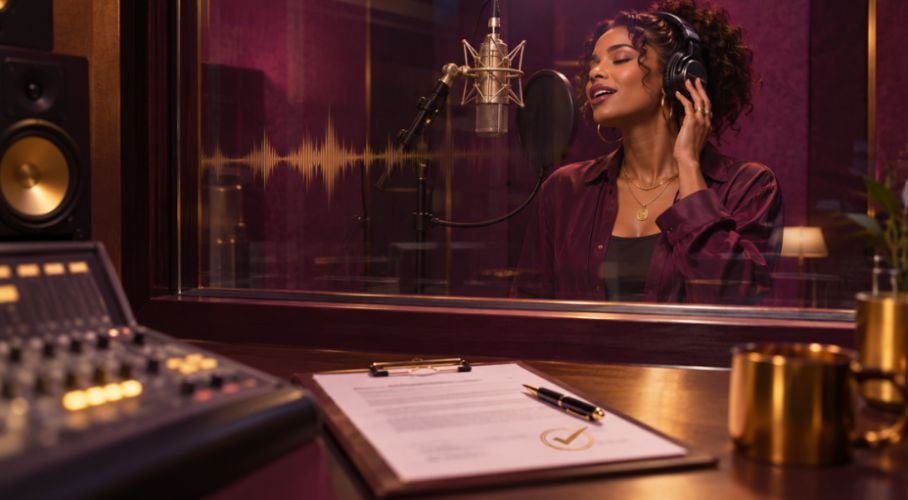
However, those savings vanish if you ignore provenance tracking. To defend our copyright registrations, we now log every human edit inside our DAW session notes. We export isolated MIDI tracks, raw vocal takes, and timestamped arrangement stems to prove substantial human transformation. Compliance adds roughly two hours of administrative overhead per single, yet it preserves 100% of our downstream licensing value.
New Studio Revenue Streams Through Licensed AI Models
AI is not strictly a defensive headache for recording studios. Following landmark litigation settlements—such as Warner Music Group’s licensing partnership with Udio and Universal Music Group’s commercial AI agreements—the industry is shifting toward opt-in monetization.
Catalog Training Deals and Voice Likeness Licensing
Studios that own their master recordings and sample libraries can now license clean, rights-cleared audio datasets directly to AI developers. Instead of watching algorithms scrape our masters for free, we negotiate upfront dataset fees and ongoing usage royalties.
We also help roster vocalists build authorized, watermarked AI voice models. When outside producers license a singer’s digital vocal twin for commercial demos or remixes, both the artist and our studio collect passive royalty splits without booking a single hour of live booth time.
Frequently Asked Questions
1. Can a studio copyright a song made with AI?
Only the human-authored elements—such as original lyrics, live vocals, or substantial arrangement edits—qualify for copyright protection, while 100% AI-generated outputs remain in the public domain.
2. Do Spotify and Apple Music pay royalties on AI-generated music?
Yes, both platforms pay standard royalties on disclosed AI tracks unless the upload violates voice-cloning rules or relies on artificial streaming bots.
3. Will ASCAP or BMI collect royalties for AI-assisted songs?
Yes, ASCAP and BMI accept hybrid compositions that combine genuine human creativity with AI tools, though fully AI-generated tracks cannot be registered.
4. How do studios prove human authorship for sync licensing?
Studios prove human authorship by archiving DAW project files, raw vocal stems, MIDI data, and session logs showing manual composition and arrangement decisions.
Don’t Let an Unclaimed Prompt Drain Your Studio’s Bottom Line
Generative tools belong in your studio’s creative toolkit, never in your unedited master bus. Before you bounce your next commercial mix, run a five-minute stem audit: strip out every unedited AI placeholder, document your human vocal and instrumental layers, and tag your metadata accurately at distribution. Treat human authorship like your studio’s most valuable piece of outboard gear—because legally, it is the only asset that actually pays the bills.